Russia Expands Military Hub Near Finland as NATO Rivalry Deepens
The planned expansion of the Kamenka garrison signals a sustained shift in regional security priorities with wider fiscal and economic implications.
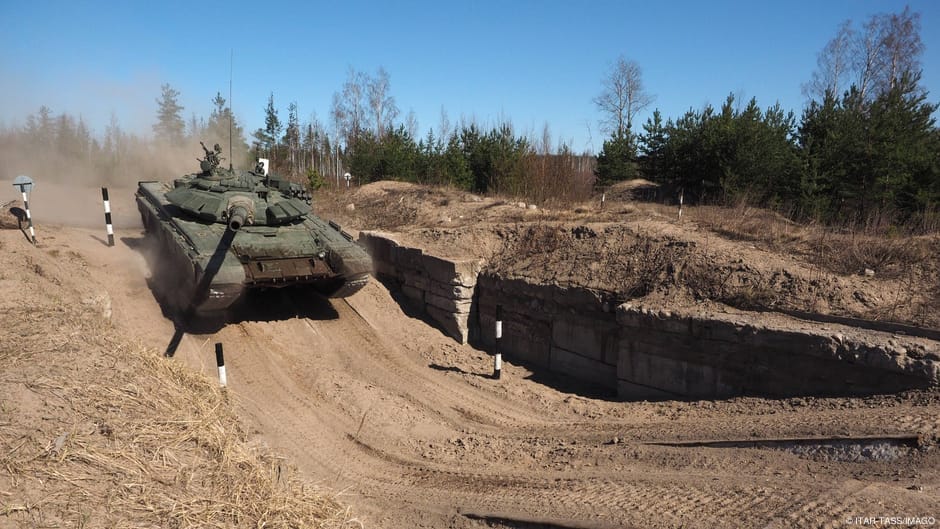
Russia is accelerating the reconstruction of the Kamenka military settlement in Karelia, about 60 kilometers from the Finnish border, as it seeks to expand the division stationed there to an expected strength of 11,000 personnel.
Finnish public broadcaster Yle reported on Monday, November 23, that numerous buildings had been demolished during the current year and that new construction was under way. Its assessment was based on an analysis of satellite imagery showing extensive changes to the garrison and its surrounding infrastructure.
The project is significant beyond its immediate military purpose. It points to a potentially durable reallocation of Russian personnel, construction capacity and public resources toward the country’s northwestern frontier following Finland’s and Sweden’s accession to NATO. For governments and businesses across northern Europe, the expansion adds another structural security consideration to decisions involving public budgets, infrastructure and cross-border investment.
From brigade to larger divisional presence
According to Yle, a brigade of about 4,400 troops had been stationed at Kamenka since the late 1990s. The site now hosts the 69th Motor Rifle Division, which is still being formed and is expected to reach 11,000 personnel.
Yle described the unit as the most powerful formation of Russia’s ground forces oriented toward Finland. The division uses the large military settlement and adjacent training areas. Personnel from the formation are also fighting in Ukraine, including in the Kharkiv area, according to the report.
“Kamenka hosts the most powerful formation of the Russian ground forces in the Finnish direction.”
The planned increase would represent a substantial expansion from the previous brigade-level presence. It also implies a longer-term requirement for housing, utilities, training grounds, maintenance facilities and local services, rather than a temporary deployment alone.
Yle estimated that approximately 8,000 people currently live in the military settlement and the neighboring residential district. That total includes the broader community around the garrison, while the division itself remains under formation.
Construction extends beyond military facilities
Satellite imagery reviewed by Yle indicated that several old equipment hangars, maintenance buildings and other structures had been demolished in the southern part of Kamenka. Two canteens and two barracks were also removed. West of the settlement, large equipment hangars were demolished on another site.
The removal of older facilities alongside new construction suggests a broad modernization of the base rather than simple capacity additions. In May, Finnish newspaper Iltalehti reported that infrastructure at Kamenka was being expanded, including the construction of new firing ranges.
Residential utilities are also being upgraded. Interfax reported that Gazprom connected 22 apartment buildings housing military families to the natural-gas network during the autumn. Such investment indicates that the expansion encompasses the civilian support system needed to sustain a larger permanent military population.
Construction activity has also been observed at the neighboring military settlement of Kirillovskoye, known in Finnish as Perkjärvi, roughly eight kilometers east of Kamenka. Yle reported that one large building complex and two smaller hangars were built there last year, although journalists could not determine the complex’s precise purpose.
Economic consequences of a hardened frontier
The reconstruction was not unexpected. Russia had previously said it would strengthen its forces in response to Finland and Sweden joining NATO. Kamenka therefore illustrates how the alliance’s northern enlargement is translating into physical infrastructure and a more permanent military posture on the Russian side of the border.
For senior decision-makers, the economic relevance lies in the persistence of that shift. Large garrison projects create continuing demand for construction, energy, transport and public services, but they also direct capital and labor toward defense-related activity. Over time, this can reinforce the growing weight of military expenditure in regional development and government resource allocation.
Across the Nordic region, a larger Russian formation close to Finland may strengthen the case for sustained defense investment, improved transport resilience and protection of energy and communications networks. These measures can generate industrial demand, but they also raise recurring fiscal costs and may compete with other public priorities.
The expansion also contributes to a less predictable environment for investment near the border. Even without any immediate change in commercial activity, businesses assessing logistics routes, infrastructure projects or long-lived assets in northern Europe may attach a higher premium to geopolitical resilience.
Kamenka’s transformation is therefore both a military development and an indicator of a longer economic cycle. As Russia builds the capacity to support a much larger force and NATO members adjust their own planning, security spending and strategic infrastructure are likely to remain more prominent in northern Europe’s policy mix.



