Putin Warns Armenia of Economic Sanctions Amid Eurasian Union Exit Threats
Russia signals tariff hikes and labor restrictions if Armenia leaves the Eurasian Economic Union, highlighting geopolitical tensions with EU alignment.
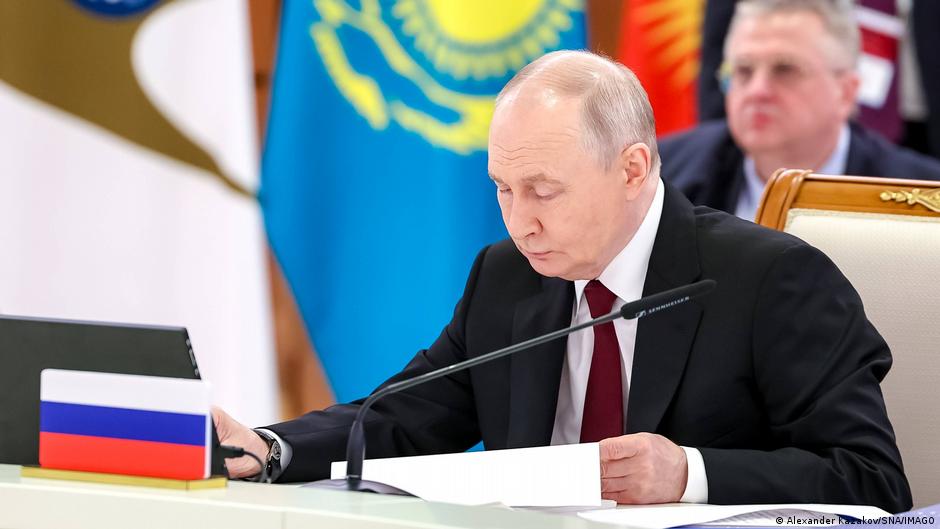
Russian President Vladimir Putin has issued a stern warning to Armenia, threatening to impose increased tariffs on railway transportation and energy supplies should the country decide to exit the Eurasian Economic Union (EAEU). The announcement was made during a press conference following the EAEU summit in Astana on May 29.
"If Armenia begins to adopt European Union standards, we will have to terminate all economic integration with them. Who will buy their products? Where will Armenian wine be exported?" Putin queried rhetorically. He further added that tariffs on railway transit and energy prices for Armenia would rise significantly.
In addition to economic pressure, Putin indicated that Armenian citizens working in Russia would be required to obtain work patents, a move that would restrict their labor mobility and flexibility. Drawing a parallel with Ukraine, he suggested that the Ukrainian crisis originated from Kyiv’s attempt to join the EU, implying a similar outcome could await Armenia.
Geopolitical Stakes in Eurasian Economic Integration
Earlier on the same day, leaders of EAEU member states—Russia, Belarus, Kazakhstan, Kyrgyzstan, and Armenia—issued a joint statement urging Armenia to hold a referendum to decide between continuing its membership in the EAEU or pursuing EU integration. This political ultimatum accentuates the high-stakes contest for influence over Armenia, especially as the country approaches national parliamentary elections on June 7.
"If Armenia transitions to EU standards, we will need to dismantle all economic ties," Putin asserted, underscoring the strategic importance of Armenia’s alignment.
Amid these tensions, Russia has escalated trade restrictions targeting Armenia. The Russian agricultural watchdog has banned imports of key Armenian goods including mineral water, vegetables, and brandy. Meanwhile, the Russian Ministry of Energy has threatened to terminate duty-free supplies of petroleum products, natural gas, and unprocessed diamonds, signaling a potential severance of vital economic lifelines.
Putin also dismissed claims by the EU accusing Russia of preparing for conflict against European nations as "nonsense and lies," labeling media outlets reporting such assertions as "tools of mass deception." He controversially cited a phrase about the efficacy of spreading outrageous falsehoods, originally from Adolf Hitler’s Mein Kampf, mistakenly attributing it to Joseph Goebbels, the Nazi propaganda minister.
The broader implications of this standoff are significant for regional and global economic dynamics. Armenia’s potential pivot towards the EU threatens to realign trade flows and political alliances in a region where Russia seeks to maintain a sphere of influence through the EAEU. Increased tariffs and trade barriers would disrupt supply chains and impact sectors reliant on cross-border commerce, including energy and agriculture.
Moreover, restrictions on labor mobility could exacerbate economic vulnerabilities for Armenian workers in Russia, who constitute an important remittance base for the Armenian economy. The pressure underscores Russia’s readiness to leverage economic instruments as political tools to deter EU integration by its neighbors.
For global policymakers and senior economic strategists, the Armenia-Russia tensions represent a case study in how regional economic unions and geopolitical ambitions intersect, with long-term consequences for trade partnerships, market access, and political stability in Eurasia. Monitoring these developments is crucial as they may foreshadow broader shifts in Eurasian economic governance and the balance of influence between Russia and the European Union.