Kyiv Bridge Strikes Deepen Risks to Ukraine’s Wartime Economy
Damage to transport and energy infrastructure is raising logistical, fiscal and diplomatic pressures as Russia intensifies attacks on Ukrainian cities.
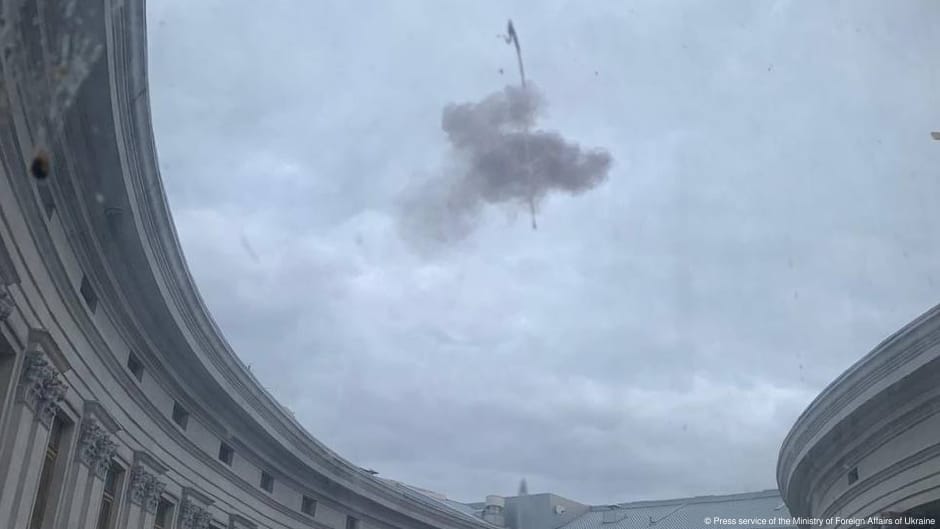
Russian forces launched another overnight ballistic missile attack on Kyiv on Friday, November 20, causing explosions and fires across several districts and damaging bridges that connect the two banks of the Dnipro River, according to Ukrainian authorities. No deaths or injuries from the overnight strikes had been reported at the time of publication.
Kyiv Mayor Vitali Klitschko said missile debris ignited a fire in a three-story building in the Obolonskyi district. An infrastructure site was hit in the Holosiivskyi district, where an office building caught fire, while another building burned in a non-residential area of the Podilskyi district. A further strike hit an open area near one of the city’s bridges.
Klitschko later reported damage to the Podilsko-Voskresenskyi and Darnytskyi bridges, as well as a repeat strike on the Pivdennyi Bridge. Traffic between the eastern and western banks of the Dnipro was disrupted. The Kyiv City Military Administration also confirmed fires in buildings in the Obolonskyi and Podilskyi districts.
Transport disruption adds to economic strain
For Ukraine’s wartime economy, attacks affecting bridges and other infrastructure create risks extending beyond the immediate physical damage. Kyiv’s river crossings are important urban transport links, and disruption can impede commuting, freight movements, emergency services and the operation of businesses across the capital. Repeated damage also increases repair requirements at a time when public finances must support defense, reconstruction and essential services simultaneously.
Several Ukrainian monitoring channels said Russian forces fired 12 ballistic missiles at Kyiv between 2:00 a.m. and 3:30 a.m. local time. Open-source intelligence reports indicated that bridges and energy facilities were the principal targets, although authorities had not confirmed that assessment and no visual evidence was available at the time.
The monitoring channels also reported that several Russian strategic bombers capable of carrying cruise missiles had taken off. Ukraine’s Air Force said launches of jet-powered unmanned aerial vehicles continued toward the Zaporizhzhia, Kirovohrad, Vinnytsia, Zhytomyr and Lviv regions, suggesting pressure on infrastructure was not confined to the capital.
The latest attack followed strikes over the preceding 24 hours that killed a 26-year-old man and injured four other people in Kyiv, according to Ukraine’s State Emergency Service. Residential and non-residential buildings and a fire-and-rescue unit were damaged. Emergency workers rescued two people from a burning six-story building, while debris broke windows at St. Volodymyr’s Cathedral in central Kyiv.
In Kharkiv, Russian forces shelled a hospital in the city’s Shevchenkivskyi district. Mayor Ihor Terekhov said at about 5:00 a.m. local time that four people were injured and approximately 50 windows were destroyed. Damage to healthcare facilities can compound the economic burden by interrupting public services and requiring scarce funds, materials and labor for urgent repairs.
Diplomatic fallout broadens the policy impact
The escalation is also creating additional diplomatic and security costs for European governments. Russian attacks on Kyiv during the day on November 19 damaged the embassies of the Netherlands and Austria. Neither government reported casualties.
Austrian Foreign Minister Beate Meinl-Reisinger ordered additional security measures in response to the intensifying attacks on the Ukrainian capital. Dutch Foreign Minister Tom Berendsen said a projectile struck a building behind the Netherlands’ embassy and caused minor damage to the mission. The Dutch authorities summoned the Russian ambassador for an explanation, Bloomberg reported.
Ukrainian Foreign Minister Andrii Sybiha said debris from a Russian drone also fell on the grounds of the Brazilian embassy during the same daytime attacks. He reported no casualties or destruction there.
“While Putin was walking the red carpet in Shenzhen, Russia struck Kyiv, damaging several European and non-European embassies,” EU foreign policy chief Kaja Kallas wrote on X.
Kallas said the European Union would summon a Russian representative over the attacks. The damage to diplomatic premises raises the international policy stakes by bringing foreign missions directly into the risk environment surrounding Russia’s campaign against Ukraine.
From a macroeconomic perspective, the pattern of attacks reinforces Ukraine’s exposure to recurring infrastructure shocks. Even where physical damage is limited, repeated alerts, transport interruptions and emergency measures can reduce productivity, raise operating costs and discourage investment. Damage to bridges or energy assets can have wider effects through supply chains, municipal services and labor mobility.
The longer-term consequence is likely to be continued pressure on Ukraine’s reconstruction needs and fiscal capacity. It also increases demands on European partners whose policy decisions encompass air defense support, financial assistance, diplomatic security and eventual rebuilding. The overnight strikes therefore represent not only an immediate security emergency but another layer of uncertainty for regional economic planning and Ukraine’s long-term recovery.



