Germany Reroutes Lithuania Tank Deployment to Limit Russia Tensions
The Bundeswehr will move tanks by rail rather than drive through Poland, highlighting the economic stakes of military mobility and escalation control.
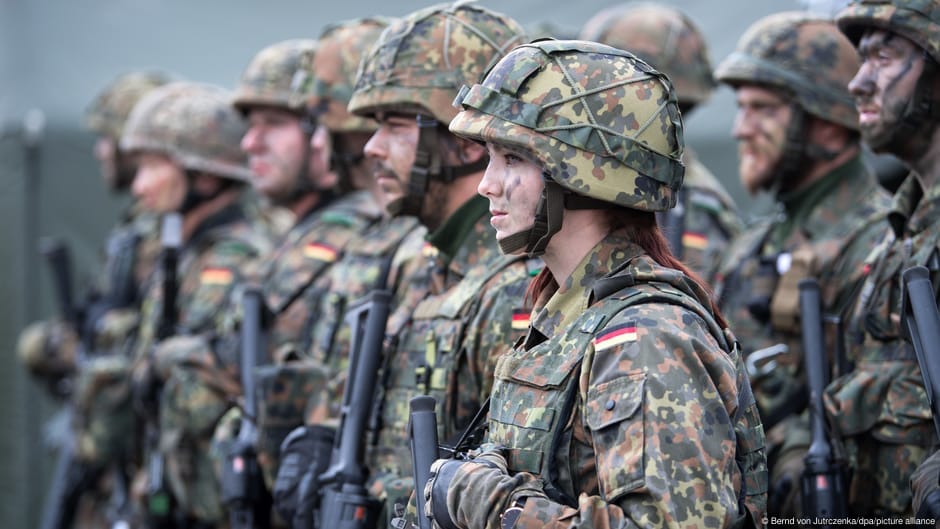
Germany’s armed forces have changed how they will transport tanks to military exercises in Lithuania, opting for rail shipment instead of moving the vehicles under their own power through Poland, according to the German tabloid Bild. The reported adjustment was intended to avoid provoking Russia as NATO members expand military activity and logistical capacity along the alliance’s eastern flank.
Bild reported overnight on Sunday, November 22, citing unnamed security sources, that the Bundeswehr would send the tanks by rail for the “Grand Eagle 26” exercise. The original approach would have involved German military vehicles travelling independently across Polish territory toward the Baltic region.
According to the newspaper’s sources, officials concluded that visible columns of German tanks moving near the Belarusian border could be exploited by Moscow. “Images of German tanks moving toward the Baltic region near the border with Belarus would have been a propaganda gift for Putin,” the sources told Bild.
Germany’s Defence Ministry did not characterize the change as an exceptional measure. Responding to journalists, it said that changing the mode of transportation was “not unusual” and should be practised because different transport options would also need to be available in the event of a real threat.
Military logistics becomes an economic policy test
The decision underscores the dual role of European transport infrastructure: railways and roads must support commercial activity in normal conditions while also providing sufficient capacity for rapid military movement. For senior economic decision-makers, that overlap has implications for public investment, cross-border coordination, infrastructure resilience and the allocation of scarce transport capacity.
Moving heavy armour by rail can reduce the public visibility of a deployment and limit wear on roads and military vehicles. It also places greater demands on rail terminals, loading equipment, compatible rolling stock and coordinated scheduling across national networks. The Bundeswehr’s explanation suggests that switching between transport modes is itself part of operational readiness, making logistics flexibility a strategic asset rather than a purely technical consideration.
The scale of the exercises illustrates the infrastructure burden. Reuters previously reported that the Bundeswehr had transferred more than 2,000 personnel through Poland for the drills, along with about 50 tracked vehicles and 650 wheeled vehicles. Bild gave a different estimate, reporting approximately 1,800 troops and more than 750 pieces of equipment.
Both accounts point to a large cross-border movement requiring fuel, railway capacity, road access, maintenance services and extensive coordination. Such operations can create short-term demand for transport and logistics providers, but they can also expose bottlenecks in infrastructure that governments increasingly view as central to both economic security and defence planning.
Changing the transport method is not unusual and must be practised so that it remains available in the event of a real threat.
The ministry’s position also reflects a broader policy challenge confronting European governments: strengthening deterrence while managing escalation risks. The decision does not reduce the number of troops participating in Lithuania, but it changes the visibility and political signalling associated with their movement. That distinction matters because perceptions can influence regional risk premiums, business confidence and expectations about future defence spending.
Long-term consequences for Europe’s eastern flank
At the same time, the Bundeswehr’s 45th Armoured Brigade is conducting the “Freedom Shield 26 II” exercise. More than 6,000 military personnel are involved in the two manoeuvres in Lithuania combined, according to the source report. The simultaneous exercises demonstrate the growing operational importance of Lithuania and the wider Baltic region in Germany’s defence posture.
Over the longer term, repeated deployments of this size could strengthen the case for additional investment in dual-use infrastructure across Germany, Poland and the Baltic states. Rail corridors, bridges, terminals and road networks designed to accommodate heavy equipment may become more prominent in budget decisions. Governments will have to balance those requirements with fiscal constraints and competing priorities, including energy systems, industrial competitiveness and social spending.
The reported rerouting also highlights how communications strategy is becoming intertwined with physical logistics. Policymakers are not only assessing whether equipment can reach its destination, but also how the journey may be interpreted by Russia, allied populations and financial markets. A transport choice can therefore serve several objectives at once: maintaining operational readiness, testing infrastructure and reducing opportunities for hostile messaging.
For businesses, the immediate significance lies less in the specific routing of German tanks than in the policy direction it represents. Europe is building a more durable framework for military mobility while attempting to prevent routine exercises from becoming catalysts for escalation. That approach is likely to require sustained public investment, closer coordination between civilian and defence authorities, and contingency planning by transport operators working along strategically important corridors.
Germany’s decision shows that deterrence policy is increasingly shaped by economic infrastructure and information risk. Rail capacity, border coordination and transport resilience are becoming integral to Europe’s security architecture, while governments seek to preserve the predictability needed for investment and trade. The challenge will be to improve readiness without allowing the mechanisms of readiness themselves to intensify geopolitical uncertainty.



