Germany and Poland Turn Defense Pact Into an Industrial Strategy
Berlin and Warsaw are linking military readiness with supply-chain resilience, advanced technology and greater European autonomy.
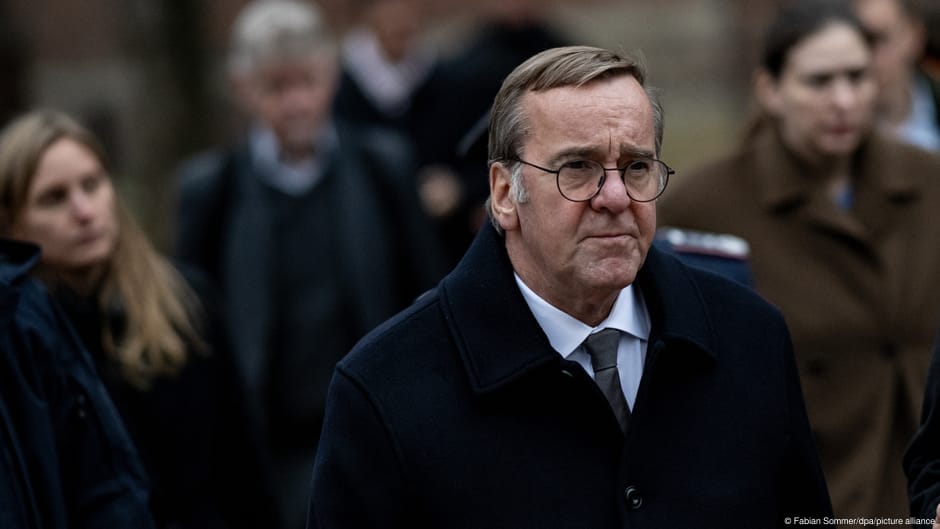
Germany and Poland are moving to translate their June 2026 defense agreement into a detailed program before intergovernmental consultations scheduled for January 2027, signaling that security policy is becoming an increasingly important component of Europe’s industrial and economic strategy.
German Defense Minister Boris Pistorius said after talks in Warsaw with his Polish counterpart, Wladyslaw Kosiniak-Kamysz, on Thursday, Nov. 19, that a complete action plan should be ready by the January meeting. The objective is to allow the two governments to begin implementing the next stages of the agreement without delay.
“This will strengthen close cooperation between the armed forces and enable us to jointly assume responsibility for Europe,” Pistorius said.
For senior economic decision-makers, the central significance of the initiative extends beyond bilateral military coordination. Kosiniak-Kamysz said the two countries intend above all to expand cooperation between their defense industries. Joint corporate initiatives are expected to make Europe less dependent on other continents, stabilize supply chains and ensure sufficient arms production.
Defense policy becomes industrial policy
The emphasis on manufacturing capacity and supply security reflects a broader shift in European policymaking. Defense preparedness is no longer treated solely as a matter of troop levels and military deployments. It increasingly involves production capacity, technology, logistics and the resilience of cross-border industrial networks.
Germany and Poland occupy complementary positions in that effort. Their planned cooperation brings together two major economies on NATO’s eastern approaches and could support a more integrated regional defense market. The commitment to develop joint initiatives also suggests that future military spending may be used to encourage European production and reduce exposure to external suppliers.
The operational dimension is already substantial. During the Grand Eagle exercise, Germany’s Bundeswehr is moving more than 2,000 military personnel through Poland, together with about 50 tracked vehicles and 650 wheeled vehicles, according to Reuters. Germany is also supporting Poland’s air defenses with Patriot missile systems and Eurofighter aircraft. Since the summer, engineering units from both countries have jointly constructed defensive positions.
These activities illustrate the logistical demands that accompany a stronger eastern flank. Large-scale movements of personnel and equipment require transport capacity, infrastructure coordination and reliable procurement. Over time, closer cooperation could therefore shape government investment priorities well beyond the defense sector, particularly where civilian and military infrastructure overlap.
A response to Russia and external dependence
On June 17, Germany and Poland pledged to broaden cooperation and deepen military coordination to confront the threat from Russia. German Foreign Minister Johann Wadephul and Polish Foreign Minister Radoslaw Sikorski said at the German-Polish Forum in Berlin that, as NATO allies and European Union partners conscious of the tragic history of the 20th century, their countries bear a special responsibility for their region and continent.
On the same day, the two defense ministers signed a new military agreement in Warsaw focused on protecting NATO’s eastern flank. Pistorius said at the time that the countries were assuming responsibility for their future in Europe. Kosiniak-Kamysz said the pact opened new opportunities for cooperation in cybersecurity and advanced technologies.
Those areas have long-term economic implications. Cybersecurity and advanced defense technologies can influence research priorities, capital allocation and the development of specialized industrial capabilities. The explicit goal of greater independence from other continents also places the German-Polish initiative within Europe’s wider debate over strategic autonomy and the risks created by concentrated supply chains.
The immediate policy test will be whether the January action plan converts broad commitments into projects that can be implemented quickly. The ministers have set a timetable, but the scale, financing and allocation of future industrial initiatives were not specified at their Warsaw meeting.
Historical responsibility and political cohesion
The talks also carried a pronounced historical and political dimension. During the Warsaw meeting and an earlier visit to the memorial at the former Nazi concentration and extermination camp Auschwitz-Birkenau, Pistorius pointed to the growing popularity of extremist and nationalist movements in many European countries.
“We know that nationalism has never been the solution to problems, but has almost always become the cause of much more serious problems,” Pistorius said in Warsaw.
At Auschwitz on Nov. 19, Pistorius described Germany’s actions as the greatest rupture of civilization in human history and said the current generation has a major responsibility to ensure that such events are never repeated. He planned to visit other memorial sites in Warsaw on Nov. 20 dedicated to the tragic events of World War II.
That historical framing matters economically as well as politically. Sustained cross-border investment and defense integration depend on institutional trust and durable public support. By linking the new partnership to remembrance, NATO obligations and EU membership, Berlin and Warsaw are presenting cooperation as a long-term European commitment rather than a temporary response to immediate security pressures.
If the planned action program delivers concrete industrial and technological initiatives, the bilateral pact could become a model for how European states combine deterrence, production resilience and regional economic coordination. Its broader consequence would be to reinforce the shift of defense from a narrowly defined budget category toward a central pillar of European industrial policy.



