US Envoys Seek Direct Russia-Europe Dialogue in Ukraine Peace Push
Washington is preparing broader talks that could reshape Europe’s security framework and reduce long-term economic uncertainty.
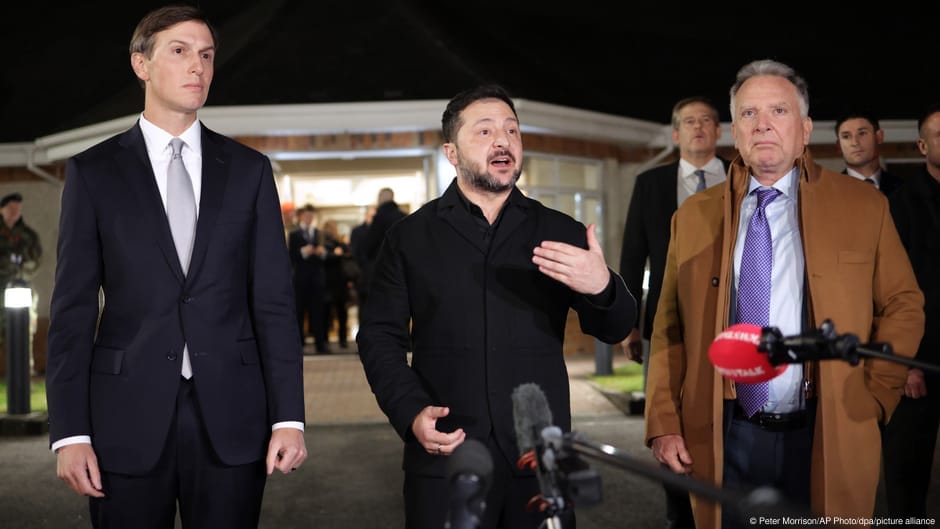
US presidential envoys Steve Witkoff and Jared Kushner are working to facilitate direct engagement between Moscow and European partners as part of negotiations over the war in Ukraine and the continent’s wider security arrangements, Kushner said on Saturday, November 14.
Writing on the social media platform X, Kushner said the two envoys were focused on enabling direct interaction between Russia and Europe. The initiative would bring European representatives more closely into a diplomatic process that has recently involved delegations from Russia, the United States and Ukraine.
The proposed expansion of the talks has significant economic implications. The war has affected trade, energy markets, public finances and investment decisions across Europe and beyond. A diplomatic framework involving the governments responsible for Europe’s security architecture could provide greater clarity about sanctions, defense spending and the conditions for any eventual economic normalization.
European security moves closer to the negotiating table
Kushner said European participation was necessary because NATO, which includes the United States, would remain a central pillar of European security in the future. His comments indicate that Washington sees any durable settlement not only as an agreement between Moscow and Kyiv, but also as a broader arrangement requiring acceptance from other parties with a direct stake in regional security.
“Any final agreement must be approved by all interested parties,” Kushner said, adding that President Donald Trump would support only arrangements that strengthen the security of Ukraine and Europe and make future conflicts less likely.
For senior economic decision-makers, this emphasis on broad approval matters because the durability of a settlement would influence its economic value. A narrow ceasefire could reduce immediate risks, while an agreement supported by Ukraine, Russia, the United States and European governments could have longer-term consequences for capital allocation, infrastructure planning and the risk premiums attached to the region.
The continuing importance assigned to NATO also suggests that European security commitments will remain a major fiscal consideration. Governments are likely to assess their defense and reconstruction priorities alongside other budget pressures, even if negotiations advance. The precise policy consequences will depend on the content of any agreement, which has yet to be disclosed.
New round to test prospects for practical compromise
Kushner said another area of work was the preparation of an agenda for the next round of trilateral negotiations involving Russia, the United States and Ukraine. According to him, both Moscow and Kyiv recognize that practical compromises will be required to end the war.
He added that several new ideas emerged during talks held over the past week and that some of them could produce a breakthrough. Kushner did not provide details, leaving unresolved which political, territorial or security issues the proposals might address.
The diplomatic activity followed several meetings involving Kushner and Witkoff. On November 10 and 11, they represented Washington at trilateral talks in Abu Dhabi attended by delegations from Moscow and Kyiv. On November 12, the US envoys traveled to Russia for a meeting with President Vladimir Putin. They arrived in Dublin the following day and met Ukrainian President Volodymyr Zelensky.
No official date for the next negotiations has been announced publicly. However, in comments to the Russian television program Vesti before departing Moscow, Kushner said further discussions would take place the following week and would use a multilateral format. Witkoff also said the date had already been determined and that European representatives would attend.
Economic consequences extend beyond an immediate ceasefire
Direct Russia-Europe talks could become an important channel for addressing the long-term economic effects of the conflict, although Kushner’s statement focused on peace negotiations and security rather than specific commercial measures. European governments remain central to decisions that affect regional defense commitments and the broader policy environment surrounding Russia.
The inclusion of Europe may make negotiations more complex because a larger group of governments and institutions will have to consider the final terms. At the same time, broader participation could improve the credibility of an agreement if all interested parties approve it, as Kushner said they must.
For businesses and policymakers, the immediate signal is one of diplomatic expansion rather than a completed breakthrough. The next round will test whether the new ideas cited by Kushner can be translated into practical compromises and whether European involvement can align security objectives among the parties.
Until the agenda and proposals become clearer, the economic outlook will remain contingent on political decisions. Even so, the move toward a multilateral format marks a potentially consequential shift: Europe would participate directly in talks whose outcome could shape its security expenditures, investment climate and economic relationship with Russia for years to come.



