Spain’s Housing Crisis Fuels Mass Protests Ahead of Snap Election
A nationwide strike over housing costs exposed deep economic strains as Spain faces a widening supply deficit and pivotal elections.
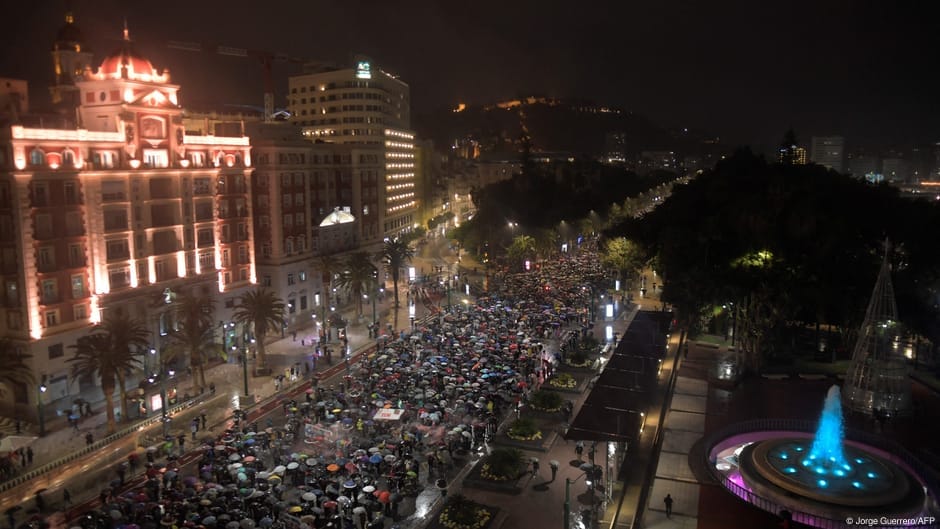
Tens of thousands of people took to the streets across Spain on Wednesday, November 11, as a day-long general strike culminated in protests against the rising cost of living and the shortage of affordable housing. Organizers called the action a “complete success,” while employers reported limited participation, underscoring the political divide over the scale and economic impact of the mobilization.
Authorities estimated that 120,000 people joined demonstrations in Madrid, although tenant associations that called for the protests put nationwide participation at 600,000. In Barcelona, police estimated that 55,000 people took to the streets.
The strike, Spain’s first general stoppage in 14 years, took place just two and a half weeks before parliamentary elections scheduled for November 29, 2026. It partially paralyzed public and economic activity across the country, placing housing affordability and household purchasing power at the center of the election campaign.
Industrial disruption highlights broader economic risks
The CCOO trade union confederation said participation exceeded organizers’ expectations and argued that the strike had brought industry and strategically important parts of the Spanish economy to a standstill.
“Electricity consumption fell to a level more typical of a Sunday than a working day. Industry and strategically important areas of Spain’s economy stopped,” CCOO wrote on X.
The CEOE employers’ association offered a sharply different assessment, saying participation was “minimal” and involved fewer than 10% of employees. The stoppages nevertheless affected major manufacturers, including Volkswagen’s operation in Pamplona and the group’s Seat subsidiary in Martorell. Wholesale markets and commercial ports, including Algeciras, were also disrupted.
For senior economic decision-makers, the shutdown illustrates how housing constraints can spill beyond the property market. When rents and home prices outpace real incomes, the consequences extend to wage demands, labor mobility, consumer spending and political stability. Disruption at automotive plants and trade infrastructure also shows the potential for a domestic affordability crisis to affect industrial output and supply chains.
Spain’s left-wing government supported the protesters, while the right-wing opposition described the demonstrations as ideologically motivated. That split increases the likelihood that housing policy, rather than remaining a sector-specific issue, will shape the country’s broader fiscal, regulatory and investment agenda after the election.
Housing shortage becomes an election-defining issue
The immediate catalyst for the nationwide protests was the eviction of 87-year-old pensioner Maricarmen Abascal from her Madrid apartment. She had lived there for 70 years and had paid €500 in rent for years. A new company acquired the property in 2018 and increased the rent to a level exceeding her pension. Abascal was evicted on September 23 and died in hospital only a few days later.
Against the backdrop of the protests, Socialist Prime Minister Pedro Sánchez announced on October 5 that parliament would be dissolved and an early election held on November 29, 2026. He attributed the decision to the critical situation that followed parliament’s rejection of the government’s housing-market reform.
The political crisis reflects a longer-term imbalance. Rents and residential property prices in Spain have risen faster than citizens’ real incomes in recent years. Many Spaniards have consequently continued living with their parents beyond the age of 30 because they cannot afford to rent homes of their own.
Rising housing prices have been linked partly to increased migrant arrivals amid insufficient construction of affordable homes. Spain’s central bank estimates that the country is short of approximately 750,000 homes. The deficit is expected to exceed one million homes by 2028, indicating that demand-side relief alone is unlikely to resolve the pressure without a substantial increase in supply.
The scale of the projected shortage points to long-term economic consequences. Persistent scarcity may constrain workforce mobility in productive urban centers, delay household formation and deepen intergenerational inequality. It also confronts policymakers with difficult choices over construction, planning, rental regulation and the distribution of costs among tenants, homeowners, developers and the state.
Mostly peaceful protests followed by Barcelona unrest
The evening demonstrations were predominantly peaceful. In Barcelona, however, disorder began after the protests had ended. A group of masked right-wing extremists smashed several shop windows, set garbage containers on fire and threw bottles, stones and firecrackers at police, according to broadcaster RTVE. Officers used batons against the attackers.
Police detained at least 52 people during protests across Spain. Although the rival assessments of strike participation remain far apart, the turnout, industrial interruptions and approaching election demonstrate that housing affordability has become a material macroeconomic and political risk. The next government will face pressure to expand supply while preventing housing costs from further eroding real incomes and social cohesion.



