Russian Libertarian Party Faction Dissolves After ‘Foreign Agent’ Listing
The closure highlights how Russia’s regulatory pressure is narrowing political participation and increasing long-term institutional risks.
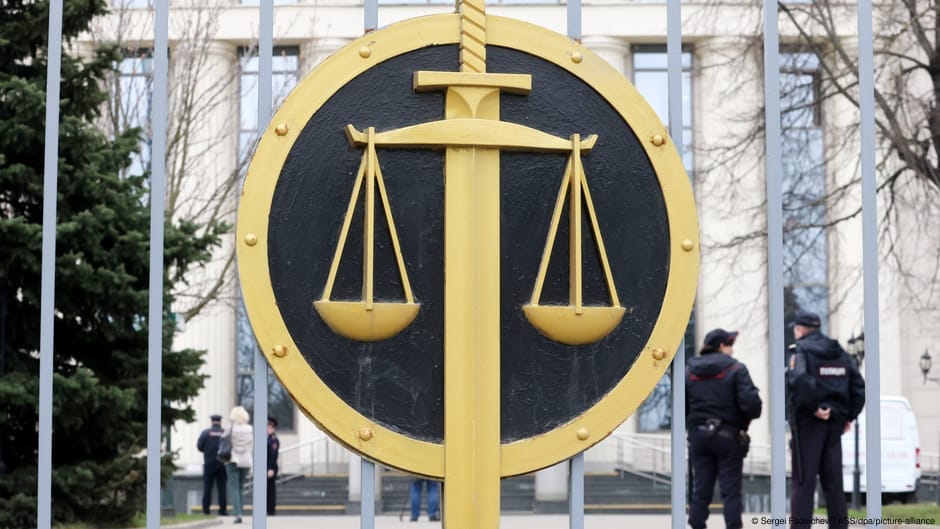
A faction of the Libertarian Party of Russia, or LPR, led by Sergei Karnavsky has voted to dissolve itself, saying its designation as a “foreign agent” made continued operations incompatible with the safety of its members and supporters.
A majority of delegates backed the decision at a party congress held on Sunday, November 15, according to statements published on the LPR’s social media pages. The move follows a sequence of Justice Ministry designations affecting rival organizations that continued to operate under the same party name after an internal split.
“We made this decision with a heavy heart, but with the understanding that we must ensure the safety of our members and supporters. Unfortunately, the very existence of the party organization in its current form now appears difficult to reconcile with ensuring such safety,” Karnavsky said.
Karnavsky is expected to submit a formal notice to Russia’s Ministry of Justice and seek the LPR’s removal from the register of “foreign agents” following the termination of its activities.
Regulatory pressure reshapes political participation
For senior economic decision-makers, the dissolution is relevant beyond the immediate fate of a small opposition organization. It illustrates how regulatory classifications can alter the operating environment for civil society and political groups, potentially reinforcing perceptions of institutional uncertainty. Over time, such perceptions may influence assessments of governance risk, human-capital mobility and the predictability of policy formation.
The LPR applied for official registration with the Justice Ministry in April 2008, but the ministry rejected its application. Despite remaining unregistered, the party could initially be viewed, with qualifications, as part of Russia’s systemic opposition because it did not openly criticize the political course of the country’s leadership. In 2012, its representatives participated in a meeting with Dmitry Medvedev, who was then Russia’s president.
The party’s positioning changed after a series of significant leadership changes. In 2017, the LPR supported Alexei Navalny as a presidential candidate. It subsequently participated in or organized several opposition demonstrations, including an April 2018 rally against the blocking of Telegram in Russia. Navalny was among the speakers at that event.
Internal conflict became increasingly visible in 2018. One source of tension was the growing influence of publicist and prominent libertarian speaker Mikhail Svetov, who had become one of the party’s most recognizable figures. The dispute culminated in a final split at the end of 2020, producing one faction led by Sergei Boyko and another associated with Svetov. Both retained the name Libertarian Party of Russia.
Emigration adds to Russia’s human-capital pressures
Members of both factions later faced intensified pressure in Russia, prompting many libertarians to leave the country. That exodus fits a broader economic concern raised whenever politically active, internationally connected or highly mobile citizens conclude that domestic participation carries excessive personal risk. The source article provides no estimate of how many party members emigrated or their economic profile, but the direction of travel underscores the potential for political restrictions to interact with longer-term human-capital losses.
On July 17, 2026, the Russian Justice Ministry designated the Libertarian Party of the Russian Federation a “foreign agent.” The ministry’s description indicated that the restrictions were directed at the LPR faction linked to Svetov. That organization responded on July 22 by announcing that it would cease operations.
One week after the first Libertarian Party designation, the Justice Ministry’s regular Friday announcement of new “foreign agents” included another LPR entry. This time, the accompanying description referred to the faction that had emerged from the Boyko-led branch and was headed by Karnavsky.
The subsequent dissolution of the Karnavsky organization effectively means that both principal groups using the LPR name have announced an end to their activities following the ministry’s actions. The sequence demonstrates how an administrative designation can produce rapid organizational consequences even where political movements have already been weakened by registration barriers, internal divisions and emigration.
From a macroeconomic perspective, the immediate impact of the LPR’s closure is likely to be limited because the party was not officially registered and held no stated role in national economic policymaking. The longer-term significance lies in the institutional signal: a narrower field for organized political activity can reduce the diversity of policy debate, including discussion of market liberalization, state intervention and individual economic rights.
For businesses and investors, the episode may therefore be read as another indicator of Russia’s evolving governance environment rather than as a standalone economic event. Continued reliance on restrictive legal classifications could deepen reputational and compliance risks, while further outward migration among politically exposed citizens may compound existing constraints on entrepreneurship, professional networks and the domestic supply of skilled labor.



