Russia and Ukraine Agree to Bring Europe Into Next Round of Peace Talks
The expanded format could link territorial negotiations to Europe’s postwar security architecture and its long-term economic outlook.
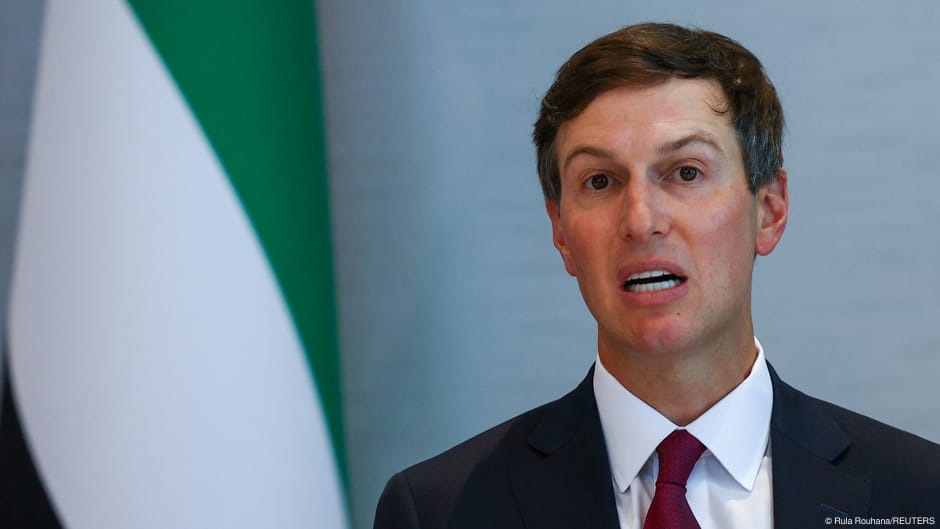
Russia and Ukraine have agreed to include European countries in the next round of negotiations on ending the war, US presidential envoy Jared Kushner said after three days of talks conducted in several formats from November 10 to 12.
The decision broadens a diplomatic process that had centered on direct Russian-Ukrainian discussions mediated by the United States. It also brings the economic and security interests of European governments more directly into negotiations whose outcome could have lasting consequences for public finances, investment, trade and reconstruction across the continent.
Kushner, who is also US President Donald Trump’s son-in-law, announced the development on the social media platform X during the night of Friday, November 13. He said preparations were also underway for what he described as the largest exchange of prisoners of war since the conflict began, potentially allowing thousands of people to return home.
Talks Expand Beyond Territorial Questions
Russian and Ukrainian delegations met in Abu Dhabi on November 10 and 11 with US mediation to discuss possible terms for ending Russia’s war against Ukraine. Kushner and Steve Witkoff, another envoy for the US president, then traveled to Moscow for talks with Russian President Vladimir Putin.
On November 12, the US negotiators flew to Dublin, where they met Ukrainian President Volodymyr Zelensky. They later held consultations with national security advisers representing Ukraine, Germany, Italy, France, Ireland, Poland and the European Union.
Kushner said the intensive diplomacy had produced significant progress in understanding the concerns of both Russia and Ukraine, identifying possible solutions and establishing a path forward.
“Both sides have now agreed to expand the next round of negotiations and include European partners,” Kushner said, adding that the broader format would address postwar European security alongside territorial issues between Russia and Ukraine.
The inclusion of European partners introduces a wider policy dimension. Territorial questions remain central to the negotiations, but any discussion of a postwar security structure could also influence the continent’s longer-term economic framework. Security commitments affect defense planning, government budgets and perceptions of political risk, while the durability of any settlement would shape the conditions for rebuilding Ukraine and restoring investment confidence.
Kushner said the US representatives had agreed with Zelensky that no broader European security arrangements would be concluded without taking Ukraine’s security concerns into account. That assurance places Kyiv’s position within negotiations that may extend beyond a bilateral settlement and into the design of Europe’s future security order.
Economic Stakes for Europe
For senior policymakers and business leaders, the significance of the expanded talks lies in their potential to connect a possible end to hostilities with decisions carrying long-term fiscal and economic consequences. European states participating in the consultations include several of the continent’s largest economies as well as countries with close geographic and security exposure to the war.
A negotiated framework could eventually affect how governments assess defense requirements, reconstruction responsibilities and cross-border risk. However, Kushner’s statement described progress in understanding concerns and identifying possible solutions; it did not announce a final agreement, provide economic terms or establish a timetable for a settlement.
The distinction is important for economic planning. Bringing more governments into the process may improve the prospects for coordinating security and postwar policy, but a larger negotiating format also means reconciling a broader range of national priorities. The immediate development is therefore a shift in the structure of diplomacy rather than evidence that the war’s economic disruption is about to end.
Even so, involving European partners at the next stage acknowledges that the consequences of a settlement would extend well beyond the Russian-Ukrainian border. The architecture of postwar security would influence the policy environment in which European governments allocate capital, manage public spending and consider longer-term economic resilience.
Large-Scale Prisoner Exchange in Preparation
Alongside the diplomatic expansion, Kushner announced preparations for what he called the war’s largest exchange of prisoners of war. He said thousands of people could return home as a result.
No precise number, schedule or operational details were disclosed. The planned exchange is separate from the unresolved territorial and security questions, but it represents a potential near-term outcome of the three-day diplomatic effort.
The next round of negotiations is expected to include European partners, although Kushner did not specify its date or location. The central test will be whether the wider format can translate the progress reported by the US envoys into arrangements acceptable to Russia, Ukraine and European governments, while addressing both immediate territorial disputes and the broader structure of security after the war.



