Pentagon Strategist’s NATO Exit Signals Strains Over Ukraine Policy
Elbridge Colby’s criticism of Ukrainian strikes inside Russia highlights a widening transatlantic dispute over strategy, funding and reconstruction.
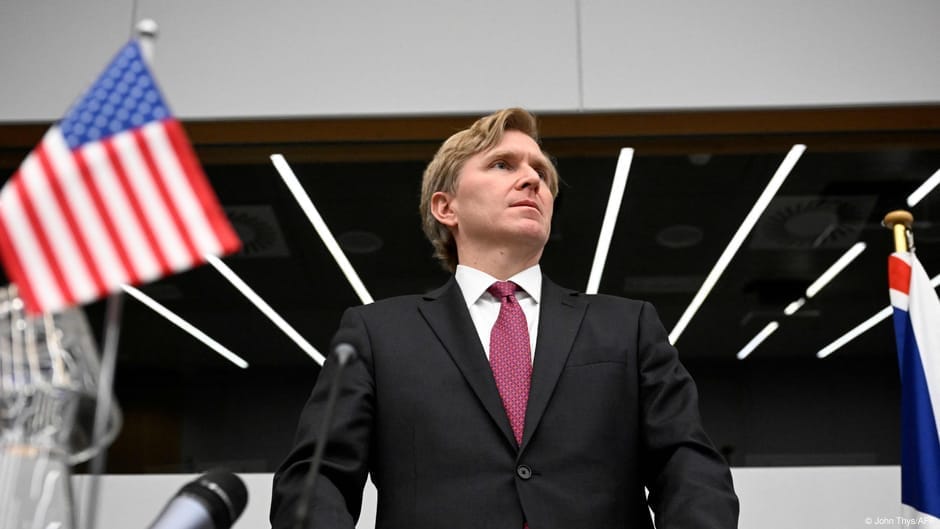
A senior Pentagon strategist left a NATO meeting on Ukraine early after criticizing Kyiv’s strikes deep inside Russian territory, according to The Telegraph, exposing policy differences that could shape European defense spending, postwar reconstruction and the broader economic costs of the conflict.
Elbridge Colby, the Pentagon’s deputy policy chief, attended the 37th meeting of the Ukraine Defense Contact Group at NATO headquarters in Brussels on November 17. The British newspaper reported on November 18 that Colby rebuked Kyiv over the attacks, arguing that they offered no significant military value.
He departed before a classified briefing by Ukrainian Defense Minister Yevhen Khmara. Washington was represented for the remainder of the meeting by Matthew Whitaker, the US permanent representative to NATO.
The episode carries implications beyond the immediate military debate. For European governments, uncertainty about Washington’s position affects multiyear defense budgets, weapons procurement and the scale of financial support that may ultimately fall on European taxpayers. It also complicates planning for Ukraine’s recovery, which will depend on long-term security commitments capable of attracting private capital and limiting reconstruction risks.
Transatlantic differences acquire an economic dimension
German sources cited by The Telegraph said Colby’s conduct raised concerns that President Donald Trump’s administration had effectively aligned itself with Russia rather than Ukraine and its European supporters. That interpretation was not presented as an official US policy statement, but it illustrates the anxiety surrounding Washington’s strategic direction.
German, British and other European officials at the meeting were reportedly puzzled by Colby’s remarks. They regard the strikes as militarily effective and believe the attacks destabilize the government of Russian President Vladimir Putin, the newspaper said.
The disagreement is not only about battlefield tactics; it concerns how costs, risks and strategic responsibilities may be divided across the Atlantic.
If the United States seeks to limit Ukraine’s operations or reduce its role in supporting Kyiv, European capitals could face pressure to close gaps in financing, air defense, ammunition and other capabilities. That would reinforce an already significant shift toward higher defense expenditure, with consequences for fiscal policy at a time when governments must also finance energy security, industrial competitiveness and aging populations.
The dispute may also influence the allocation of scarce military resources. A strategy focused on strikes inside Russia can require different intelligence, weapons and logistical support from one centered on defending Ukrainian territory. Divergent assessments of military value therefore translate into competing procurement priorities and potentially higher coordination costs among allies.
For businesses and investors, the durability of Western coordination matters because geopolitical uncertainty affects energy markets, supply chains, sovereign risk and expectations for regional growth. A visible split within NATO could prolong uncertainty about the conflict’s trajectory and raise the risk premium attached to reconstruction projects in Ukraine.
Departure questioned as European leaders prepare Berlin talks
It was claimed that Colby had to leave the meeting to catch a flight from a nearby airport. After departing the session, however, he held a press conference in the atrium of NATO headquarters at around 5 p.m. local time, or 7 p.m. Moscow time, before heading to the airport.
The timing placed additional attention on his absence from the classified Ukrainian briefing. Without details of that report, it is unclear whether the information presented later in the meeting could have affected the US assessment of Kyiv’s operations. Nevertheless, the sequence reinforced European concerns about the political signal sent by the early departure.
The tensions come ahead of a November 19 meeting in Berlin of the “coalition of the willing.” British Prime Minister Andy Burnham is due to co-chair the talks with the French president and the German chancellor. Around 20 heads of state and government, primarily from European countries, are expected to discuss further support for Kyiv.
The meeting is also intended to address plans for Ukraine’s postwar recovery. That agenda links near-term military policy to a much larger economic challenge: rebuilding infrastructure, restoring productive capacity, securing investment and creating conditions for displaced people and companies to return.
Credible security arrangements will be central to those plans. Reconstruction capital is likely to remain expensive or unavailable if investors believe renewed attacks could destroy assets or interrupt operations. Conversely, a stable and coordinated Western policy could lower perceived risk and help mobilize financing beyond direct government aid.
For senior decision-makers, the Brussels episode underscores how tactical disagreements can generate long-term economic consequences. The central question is whether the United States and Europe can maintain a coherent approach while simultaneously funding Ukraine’s defense, expanding their own military capacity and preparing for recovery. Any sustained divergence would make each objective more costly and could shift a greater share of the financial burden toward Europe.



