Pentagon Curbs Canada Defense Ties as Trade Frictions Deepen
The directive preserves NATO, NORAD and intelligence links but adds uncertainty to a relationship central to North American security.
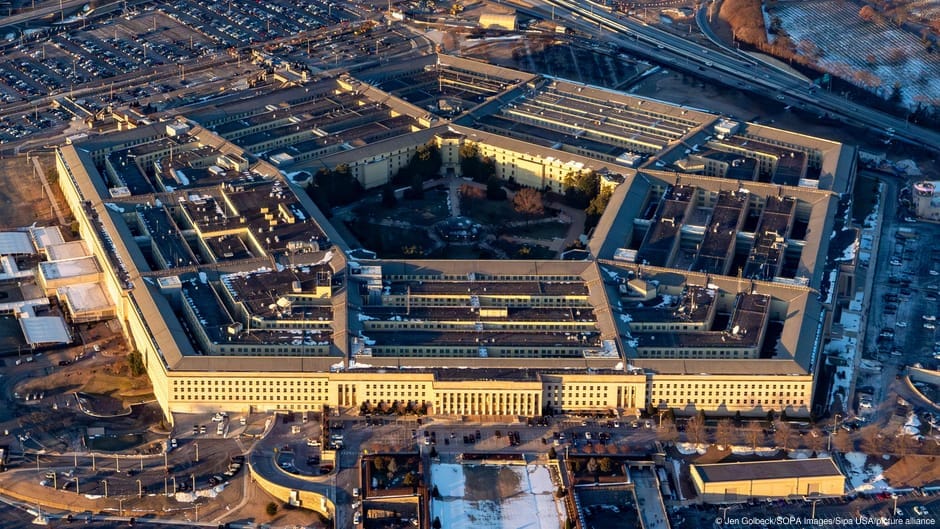
US Defense Secretary Pete Hegseth has imposed new restrictions on defense cooperation between the United States and Canada, according to The Washington Post, which cited officials familiar with a classified memorandum.
The directive was circulated last week, although the newspaper said it had not reviewed the document itself. One person familiar with the measure said Canadian officials were likely to view it as a “slap in the face.” The move is also expected to raise questions about which areas of military interaction between the neighboring countries will be constrained.
For senior economic and policy decision-makers, the significance extends beyond the defense establishment. The restrictions emerge as Washington and Ottawa face broader strains involving trade, public procurement and Canada’s prospective relationship with the European Union. Even if the immediate operational effect proves limited, the directive introduces another element of uncertainty into one of the world’s most closely integrated bilateral relationships.
Core security channels remain protected
Hegseth’s spokesman, Sean Parnell, said the US Department of Defense was taking steps to ensure that its engagement with Canada advances specific US defense objectives and ultimately strengthens the bilateral defense relationship.
“The department is prioritizing opportunities for bilateral cooperation that strengthen the defense of our nations and the entire hemisphere.”
Parnell added that the Pentagon’s approach would support Canada’s ability to meet its NATO commitments. He also said the directive would not affect intelligence sharing, cooperation within NATO or the countries’ work through the bilateral North American Aerospace Defense Command, known as NORAD.
Those exemptions indicate that Washington is seeking to preserve the institutional foundations of continental defense while applying tighter conditions to other forms of cooperation. The source article does not specify which activities will be restricted, leaving governments, military planners and defense-sector businesses without a clear view of the directive’s practical reach.
The White House referred the newspaper’s questions to the Pentagon. The Canadian Embassy in Washington did not respond to a request for comment.
Defense policy intersects with widening trade tensions
The decision follows a series of US measures and warnings directed at Canada and its international partnerships. In mid-September 2026, President Donald Trump said he was prepared to halt trade with the European Union if the bloc continued to expand its partnership with Canada.
Trump was responding to a journalist’s question about European Commission President Ursula von der Leyen’s plans to make Canada the EU’s “first associate member.” Speaking at a campaign event in North Carolina, Trump described the proposal as “ridiculous” and said that if he considered the step unfriendly, he would impose very high tariffs or end trade with Europe.
He added that there would be no problem if the intentions behind the initiative were benign. If they were not, he said, imposing very high tariffs on Europe would be one possible response.
At the same time, the White House announced that Trump had signed a memorandum barring Canadian goods from participation in US federal procurement. According to the administration’s statement, Washington adopted the measure in response to Canada’s allegedly unjustified new barriers against American companies seeking access to its government procurement market.
Economic implications depend on the directive’s scope
The immediate macroeconomic consequences cannot be quantified from the available information because the memorandum remains classified and no affected programs have been identified. However, the combination of defense restrictions, procurement barriers and tariff threats points to a policy environment in which security and commercial relations are becoming more explicitly conditional.
That shift matters because defense cooperation can influence industrial planning, government contracting and long-term investment decisions. Uncertainty about the eligibility of Canadian suppliers or the future structure of joint activity could complicate decisions even if intelligence sharing, NATO coordination and NORAD operations continue unchanged. The source does not establish that the directive directly restricts procurement or private-sector contracts, but the lack of detail creates a risk that organizations will delay commitments until its boundaries are clearer.
The wider dispute also has implications for Europe. Trump’s warning connects the EU’s developing relationship with Canada to the possibility of tariffs or even a cessation of trade with the bloc. This places a strategic partnership initiative within a much larger transatlantic economic calculation and signals that Washington may assess commercial arrangements through a geopolitical lens.
For Canada, the central policy challenge is to preserve access to US security and procurement networks while pursuing closer ties with Europe. For the United States, tighter controls may provide leverage and align cooperation more closely with stated defense objectives, but they may also increase friction with a NATO ally whose military institutions remain embedded in continental security structures.
The decisive issue will be implementation. If the restrictions remain narrow and exempt the most consequential channels, their economic effect may be contained. If they extend into industrial cooperation or program planning, they could reinforce the uncertainty already generated by procurement restrictions and tariff warnings. Until Washington clarifies the directive, businesses and policymakers will have to distinguish between preserved institutional commitments and a bilateral relationship that is becoming more conditional at its margins.



