Missile Strikes Hit Kyiv Commercial and Industrial Sites, Injuring Four
Attacks on urban, commercial and critical infrastructure underscore persistent risks to Ukraine’s economic capacity and civilian activity.
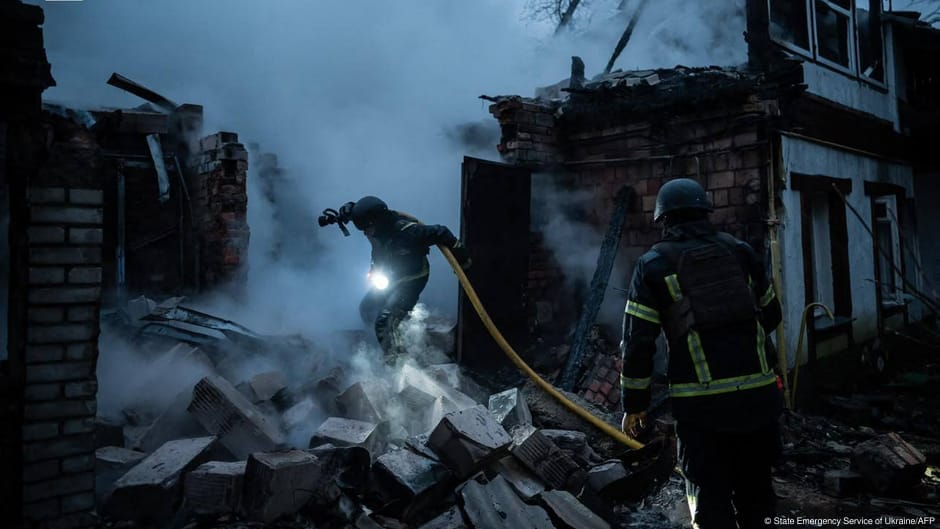
Ballistic missile strikes hit Kyiv late on Wednesday, November 25, injuring four people and damaging commercial and industrial properties, according to the Ukrainian capital’s mayor, Vitali Klitschko. Two of those injured were hospitalized in serious condition.
The strikes affected the Desnianskyi district on the left bank of the Dnipro River. Klitschko said the sites hit included a shopping center, a building located within an industrial zone and other non-residential premises.
The attack adds to the sustained pressure on Ukraine’s urban economy, where risks to commercial property, industrial facilities and essential services complicate business operations and public planning. Even when strikes do not directly target production, damage to workplaces, retail premises and surrounding infrastructure can interrupt employment, distribution and consumer activity.
Four people were injured in Kyiv, with two hospitalized in serious condition, according to Mayor Vitali Klitschko.
Kharkiv residential building struck by drone
On the morning of November 26, Kharkiv came under attack by Russian drones, Mayor Ihor Terekhov said. According to Terekhov, a drone struck a high-rise residential building in the Novobavarskyi district in the city’s southwest, starting a fire on the 15th floor.
At least three people were injured, the mayor said. Terekhov also reported another impact in the Kholodnohirskyi district but did not specify what type of property had been hit.
The Kharkiv incident illustrates the broader economic consequences of attacks affecting residential areas. Damage to housing can displace residents, create additional demands on emergency and municipal services, and increase the resources needed for repairs. Such disruption operates alongside the direct human cost of the attacks and places continuing pressure on local authorities responsible for maintaining urban services.
Critical infrastructure and logistics remain exposed
The latest incidents followed attacks across several Ukrainian regions during the night of November 25 that killed three people. In the Odesa region, local authorities said a 17-year-old boy and a 41-year-old man were killed. Three other residents of the region were injured, including a 12-year-old child.
One person was also killed on the morning of November 25 in Bila Tserkva, a city in the Kyiv region, according to the authorities. Officials reported attacks on critical infrastructure as well as an Epicentr shopping center and a Nova Poshta branch.
The range of affected sites—including critical infrastructure, retail property, industrial premises, housing and a postal branch—shows how the effects of repeated attacks can spread through multiple parts of the economy. Shopping centers support consumer activity and employment, while postal facilities are part of the logistics networks used by households and businesses. Industrial-zone damage can also affect production sites or nearby operations, even when officials do not provide details about the functions of the buildings struck.
For senior economic decision-makers, the pattern highlights the continuing importance of physical security in assessments of Ukraine’s near-term outlook and longer-term recovery. Repeated damage to different categories of property can influence where companies operate, how they manage inventories and logistics, and how public institutions prioritize limited repair capacity.
The incidents also demonstrate the fiscal challenge facing national and municipal authorities. Emergency response, repairs to public infrastructure and support for affected residents must be handled while attacks continue. That creates competing demands between immediate recovery and longer-term investment, with local governments required to restore services while maintaining readiness for further disruption.
Long-term implications for reconstruction
Ukraine’s eventual reconstruction needs will depend not only on major infrastructure losses but also on the accumulation of damage across commercial buildings, residential properties, logistics facilities and industrial areas. The attacks reported in Kyiv, Kharkiv, the Odesa region and Bila Tserkva illustrate how those costs can emerge simultaneously across several regions and economic functions.
The available official accounts did not provide financial estimates for the latest damage or detailed assessments of operational disruption. However, the repeated exposure of critical and civilian infrastructure indicates that economic planning must account for continued uncertainty, including the possibility of new repair requirements and interruptions to local commerce.
Beyond the immediate casualties, the longer-term consequence is a more difficult environment for investment and reconstruction sequencing. Policymakers and businesses must weigh urgent restoration against resilience measures intended to reduce future disruption. The strikes of November 25 and 26 reinforce that security conditions remain inseparable from Ukraine’s economic prospects, municipal finances and the pace at which normal commercial activity can be sustained.



