Merz Ties Broader EU Financial Deals to €45 Billion Ukraine Funding Gap
Germany is pressing every EU member to share the cost of Ukraine’s financing as divisions threaten wider budget negotiations.
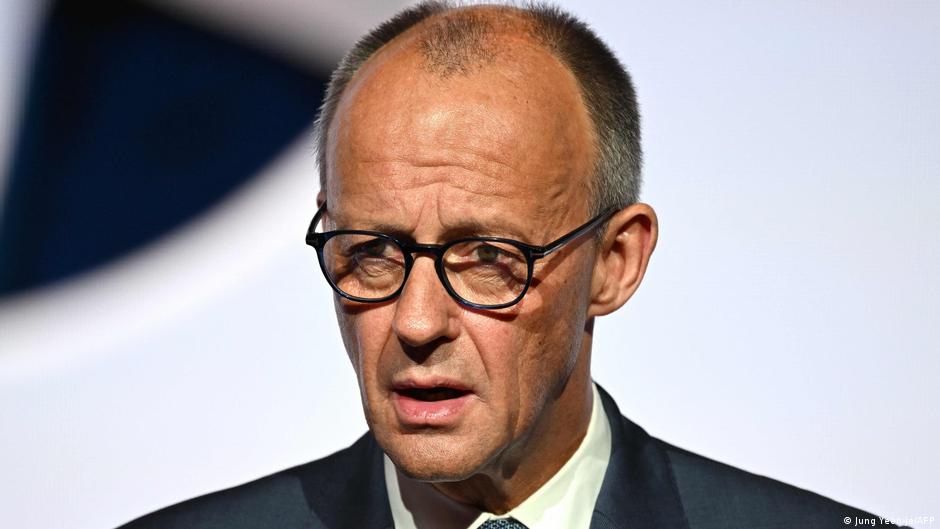
German Chancellor Friedrich Merz has called on every European Union member state to make a “fair contribution” toward closing a multibillion-euro gap in financing for Ukraine, linking agreement on the issue to progress on other EU decisions with financial consequences.
In a letter to European Council President António Costa, Merz argued that a common commitment to supporting Ukraine was a necessary condition both for resolving the immediate funding shortfall and for discussing other financially significant matters. The German chancellor’s formulation amounts to an indirect warning that Berlin could block unrelated EU financial decisions if other member states decline to participate.
The immediate issue is a €45 billion contribution expected from the EU toward Ukraine’s financing needs for the coming year. The European Commission previously estimated the overall shortfall at €70 billion, with the remaining amount to be covered outside the bloc’s contribution.
“Support for Ukraine is a matter of our indivisible European security, and this principle must also apply to the distribution of the burden of that support,” Merz wrote.
Ukraine financing becomes leverage in EU budget policy
Merz is also seeking a durable, multiyear mechanism for financing Ukraine through negotiations on the EU’s 2028-2034 budget. Ukraine is now in the fifth year of resisting Russian aggression, and the German position suggests that support for Kyiv is moving from a succession of emergency packages toward a structural component of European fiscal planning.
That shift carries wider economic implications for the bloc. Incorporating Ukraine-related commitments into the next long-term EU budget would require governments to reconcile security spending with competing priorities and national fiscal constraints. It would also turn the distribution of Ukraine’s costs into a central test of burden-sharing among member states.
Merz asked Costa to make the funding issue a priority at the EU’s informal summit in Dublin on November 13. The request places the dispute directly on the agenda for national leaders and increases the prospect that Ukraine financing will become intertwined with negotiations over other areas of EU expenditure.
The bloc agreed last year to provide Kyiv with a €90 billion loan for 2026 and 2027. That decision was blocked for an extended period by Hungary’s previous government, but the country’s new prime minister, Péter Magyar, lifted the blockade. Kyiv received the first tranche of the loan on June 25.
Those resources are now considered insufficient. In October, Ukrainian President Volodymyr Zelenskyy asked the country’s partners for an additional €70 billion so Ukraine could continue defending itself against Russian aggression. EU heads of state and government subsequently instructed the European Commission to prepare a proposal addressing that financing requirement.
Resistance exposes limits of fiscal solidarity
Securing unanimous political support remains difficult. Bulgarian President Rumen Radev and Slovak Prime Minister Robert Fico have already said that they do not intend to participate in a new round of EU financial assistance for Ukraine. Contributions from Hungary and the Czech Republic also remain uncertain.
Merz is due to meet Magyar in Berlin on November 10, with assistance for Kyiv expected to be among the principal topics. Hungary’s earlier reversal demonstrated how a change in national leadership can alter the EU’s ability to mobilize common financial support, but the positions of several governments show that the underlying conflict over burden-sharing has not disappeared.
Germany is by far Ukraine’s largest donor among EU countries. The German government valued its support as of June 30, 2026, at €100 billion. However, the Kiel Institute for the World Economy estimated that €36 billion of that amount was spent inside Germany, while a further €22 billion represented future commitments.
Those distinctions matter for policymakers assessing the near-term fiscal impact of assistance. Headline totals can combine direct transfers, domestic spending and pledges that have not yet resulted in expenditure. As EU leaders consider another large package, the debate is therefore likely to encompass not only how much each country promises, but also when funds are disbursed and where the associated spending occurs.
Merz’s intervention raises the economic stakes by connecting Ukraine support to the broader functioning of EU financial decision-making. If Berlin follows through on its implied threat, resistance from a small group of governments could delay agreements beyond the Ukraine file. Conversely, a settlement could establish a precedent for treating collective security obligations as a shared and recurring claim on the EU budget.
The longer-term consequence is a potential reordering of European fiscal priorities. A multiyear solution in the 2028-2034 budget would provide Kyiv with greater predictability, while obliging member states to recognize Ukraine financing as a sustained commitment rather than a temporary response. The immediate €45 billion gap has consequently become a test of whether the EU can translate its common security position into a common financial policy.



