Macron Links Ukraine Aid to Europe’s Long-Term Economic Security
France’s president says sustained support for Kyiv is essential as widening fiscal constraints test Europe’s strategic commitments.
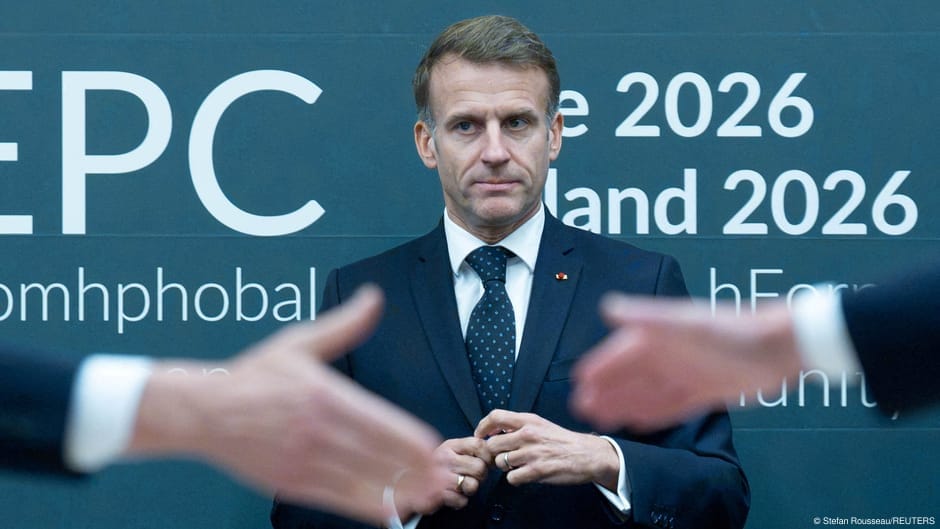
French President Emmanuel Macron has criticized calls to restrict assistance to Kyiv, framing continued support for Ukraine as an investment in Europe’s long-term security rather than a discretionary expense. His intervention highlights a widening policy tension across the continent: European governments are seeking to maintain Ukraine’s resilience while confronting large budget deficits, elevated defense spending and competing domestic priorities.
In a post published on X on Saturday, November 14, Macron argued that allowing Russia to impose its will by force on one European country would weaken the region as a whole. He said limiting assistance would pressure Ukraine into an unjust peace, leave it vulnerable over the long term and, by extension, increase risks for all of Europe.
“This is the spirit of defeatism. This is a direct path to the next war,” Macron wrote.
For senior economic decision-makers, the argument carries implications beyond military policy. Macron is effectively presenting support for Ukraine as a form of continental risk management: the near-term fiscal cost of assistance must be weighed against the potentially larger economic consequences of renewed conflict, prolonged instability, disrupted investment and permanently higher security expenditure.
European leaders set winter and peace priorities
Macron said the war in Ukraine was the central issue at the ninth European Political Community summit on November 12 and at the European Union’s informal summit of heads of state and government in Dublin on November 13. According to the French president, leaders agreed on two priorities: helping Ukraine through the winter and continuing joint work with Kyiv toward a just and lasting peace.
He stressed that Europe must play the most active possible role because the continent’s security depends on the terms of any settlement. That position points toward a more autonomous European role in postwar planning, including decisions about defense capacity, financial commitments and the division of responsibility with Washington.
Macron also said Ukraine, which he described as possessing Europe’s strongest conventionally armed military, belongs in NATO. In his view, Kyiv and the alliance together play a key role in Europe’s security architecture. He called for European governments to go further by clearly defining their preferred postwar order, communicating that vision to Russia and determining what they expect from the United States regarding Europe’s long-term security.
Such choices could influence public spending and industrial policy for years. A postwar security framework involving Ukraine would affect defense procurement, infrastructure protection, energy resilience and the allocation of capital across Europe. It would also shape how governments balance national military budgets against collective funding mechanisms at a time when fiscal rules are again constraining policy.
Fiscal pressure exposes limits to collective financing
Macron’s comments followed an announcement by Polish Prime Minister Donald Tusk in Dublin on November 13 that Poland would suspend contributions to the PURL program, through which European countries purchase US weapons for Ukraine. Tusk cited Poland’s large budget deficit and Warsaw’s already high defense spending.
Tusk said Poland had provided, and continued to provide, substantial assistance to Ukraine. However, given the country’s financial capacity, it would not commit additional funds because its own defense and security expenditure was already among the highest in Europe.
The Polish decision illustrates the increasingly difficult trade-offs facing governments that support Ukraine strategically but have limited budgetary room. High national defense outlays can strengthen Europe’s aggregate security capacity, yet they may also reduce the resources available for multinational initiatives. Unless European institutions devise burden-sharing arrangements that reflect differences in fiscal capacity, collective programs may face uneven participation.
Bulgarian Prime Minister Rumen Radev made a similar statement in Dublin while commenting on discussions about a new loan for Kyiv. He said Bulgaria was currently unable to provide financial assistance to Ukraine and noted that the European Union had opened an excessive deficit procedure concerning his country.
Radev said Bulgarian authorities would consider participation only if the funds were directed toward humanitarian assistance, energy supplies and medical needs rather than weapons purchases. That distinction signals how budget constraints may lead governments to narrow the categories of support they are prepared to finance, potentially fragmenting Europe’s response into military and nonmilitary tracks.
A long-term test of Europe’s policy capacity
The competing positions reveal a central macroeconomic challenge for Europe. Leaders must fund immediate security needs while preserving debt sustainability and maintaining investment in growth, energy systems and public services. The debate is therefore shifting from whether Ukraine should receive support to how that support can be financed and distributed without undermining national fiscal stability.
Macron’s warning suggests that insufficient spending today could create greater liabilities later if an unstable settlement raises the probability of another war. Poland and Bulgaria, meanwhile, demonstrate that political commitment does not eliminate binding budget constraints. The durability of Europe’s Ukraine policy may ultimately depend on financing models that recognize both realities: security has a collective economic value, but national governments do not have equal capacity to pay.



