Israel’s Herzog Taps Opposition Leader Eisenkot to Form Government
The coalition mandate puts Arab parties at the center of negotiations that could reshape Israel’s fiscal, security and diplomatic outlook.
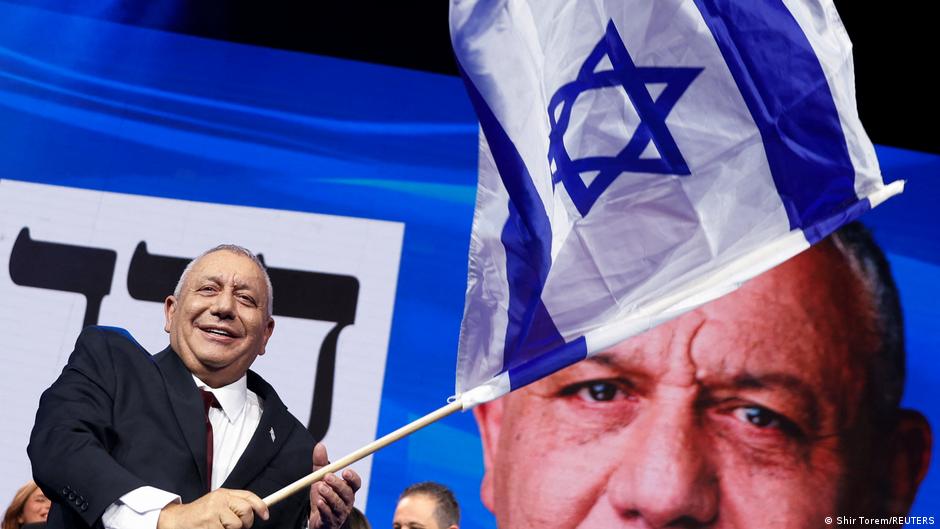
Israeli President Isaac Herzog will ask Gadi Eisenkot, leader of the opposition Yashar party, to form a new government following elections that left neither major political bloc with a parliamentary majority. The outcome of the coalition negotiations could have significant implications for Israel’s economic policy, relations with Western partners and management of the continuing costs associated with regional conflict.
Herzog’s office said on Saturday, November 7, that the president would formally present Eisenkot with the mandate at the presidential residence in Jerusalem on the evening of Sunday, November 8. Eisenkot will then have 28 days to assemble a governing coalition. Herzog may extend the deadline by a further 14 days if necessary.
Receiving the mandate does not automatically make Eisenkot prime minister. If he fails to secure sufficient parliamentary support, Herzog could transfer the mandate to another politician, including Benjamin Netanyahu, leader of the governing Likud party. Should that effort also fail, Israel could face another election, prolonging political uncertainty and delaying decisions on spending, security and economic priorities.
Arab parties hold the coalition balance
Herzog made the decision after extensive consultations with politicians and party leaders about their preferred candidate for prime minister. Eisenkot received 67 recommendations, compared with 46 for Netanyahu. A parliamentary majority requires 61 seats in the Knesset.
In the October 27 election, Netanyahu’s governing far-right coalition lost its majority and secured 53 seats. The four-party alliance led by Eisenkot’s Yashar holds 48 seats. Two Arab parties won a record combined 19 seats, making their support potentially decisive in forming the next government.
The coalition arithmetic places two Arab parties in a pivotal position after they secured a record 19 Knesset seats.
Eisenkot, a former chief of staff of the Israel Defense Forces, has until now rejected an alliance with Arab parties. Any change in that position would mark an important political shift and could determine whether the country obtains a functioning government or returns to the polls. Netanyahu previously called for a national unity government intended to prevent parties representing Israel’s Arab citizens, who have citizenship and voting rights, from participating in governing the country.
For senior economic decision-makers, the immediate issue is whether coalition talks produce a stable administration capable of setting durable fiscal and policy priorities. A fragmented Knesset raises the possibility of protracted bargaining, while another election would extend uncertainty surrounding government spending and the broader direction of economic management.
Security policy and Western relations
Eisenkot entered politics in 2022. Following the Hamas attack on Israel, he temporarily joined Netanyahu’s war cabinet before returning to the opposition. He has sharply criticized the incumbent prime minister’s governing style and the conduct of the military operation in the Gaza Strip.
He has also condemned violence by Israeli settlers against Palestinians in the occupied West Bank. Eisenkot argues that such violence has contributed to strained relations between Israel and Western governments. That position gives the coalition process an international economic dimension because the composition and policies of the next government will be closely watched by Israel’s Western partners.
Eisenkot’s reputation rests partly on his military background and partly on personal loss. His 25-year-old son was killed in combat in Gaza in December 2023, followed by two of his nephews. One of Eisenkot’s principal election commitments was the creation of an independent state commission to investigate the security failures of October 7, 2023.
The proposed inquiry could become a central element of the next government’s agenda. Beyond questions of accountability, its findings could influence the organization of national security policy and the allocation of public resources over the longer term. However, the source material provides no details about the commission’s structure, timetable or potential fiscal effects.
A consequential coalition test
Eisenkot is also associated with the Israeli military strategy known as the Dahiya doctrine. It calls for an asymmetric and disproportionately large response to security threats, including the destruction of civilian infrastructure in areas used by an adversary to fire on Israel. He applied the doctrine against Hezbollah in Lebanon during the 2006 war.
That record adds complexity to the policy outlook. Eisenkot has criticized Netanyahu’s conduct of the Gaza operation and settler violence in the West Bank, while remaining closely identified with a forceful military doctrine. Coalition partners, particularly the Arab parties whose backing may be essential, will therefore have to reconcile substantial differences over security and Palestinian affairs.
The negotiations will determine more than the identity of Israel’s next prime minister. They will test whether a divided parliament can support a government able to address security accountability, relations with Western states and the economic consequences of prolonged political and regional instability. Eisenkot’s 67 recommendations give him the first opportunity, but the decisive threshold remains a coalition commanding at least 61 Knesset seats.



