Germany Bars Chinese Drones and Cars From Military Sites Over Spy Risks
The Bundeswehr’s restrictions signal a wider European shift toward security-led procurement and tighter scrutiny of connected technologies.
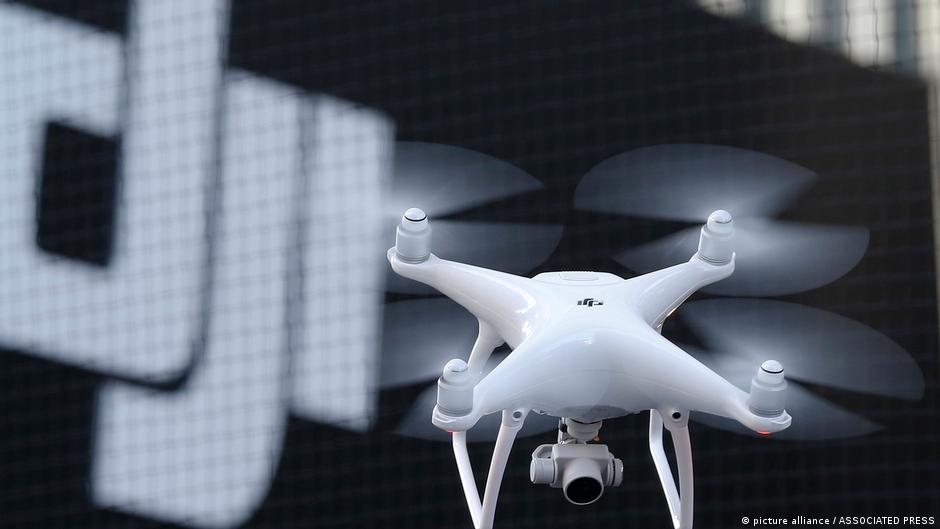
Germany’s armed forces have prohibited the use of small Chinese-made drones at barracks and military training grounds, extending Europe’s economic security debate from telecommunications and energy infrastructure to connected vehicles and unmanned systems.
A German Defence Ministry representative told Der Spiegel that the Bundeswehr was imposing the ban with immediate effect. Units have been ordered to stop using Chinese drones already purchased, including models made by DJI. Existing systems are to be replaced with German or other European products.
The German military has also barred vehicles made by BYD, Geely and other Chinese brands from entering garrisons and additional military facilities. Service personnel who own such cars must leave them outside designated security areas and walk to their workplaces.
The measures reflect concern that cameras and sensors embedded in Chinese-manufactured equipment could collect classified information and transmit it to Chinese security authorities. According to Der Spiegel, drones could potentially expose details of military exercises, images of barracks and training grounds, or information about German weapons systems.
Security policy becomes industrial policy
For senior economic decision-makers, the restrictions illustrate how national security considerations are increasingly shaping procurement, market access and technology standards. The Bundeswehr’s plan to replace equipment with German or European alternatives could support regional manufacturers, but it may also increase acquisition costs if lower-priced Chinese products are removed from consideration.
The policy creates a clear preference for trusted domestic and European supply chains in sensitive environments. If similar restrictions spread through government agencies, critical infrastructure operators or regulated industries, their cumulative effect could redirect public and private investment toward European drone, sensor, software and vehicle suppliers.
The Bundeswehr’s decision turns concerns about connected hardware into a concrete procurement rule, with implications extending beyond military sites.
The move also highlights an expanding definition of strategic dependence. Policymakers are no longer focused only on where a product is assembled. Cameras, microphones, sensors, communications modules and software architectures are becoming central to assessments of whether equipment can be safely deployed.
That approach was reinforced by a report in The Telegraph on August 9 concerning the British Royal Navy’s K3 Scout reconnaissance maritime drones. The newspaper reported that the systems, which contained Chinese-made components, had secretly transmitted information to China. The drones, valued at £12 million, were supplied by Britain’s Kraken Technology Group, while their onboard cameras were made by a subcontractor that had guaranteed their security.
A British Defence Ministry source said London had proposed using the K3 maritime drones to protect freedom of navigation in the Strait of Hormuz. The reported incident therefore raised questions about component-level oversight in equipment intended for strategically important operations and trade routes.
Connected vehicles face closer scrutiny
The restrictions on Chinese cars may have broader commercial consequences because modern electric vehicles generate large volumes of data about their surroundings and movements. Der Spiegel reported in late August, citing experts, that connected Chinese electric cars could provide a channel for espionage through their cameras, microphones and sensors. German authorities are conducting an analysis of those risks, according to the magazine.
For automakers, the issue introduces a new layer of regulatory uncertainty. Vehicle cybersecurity, control over stored data and the location of data processing may become more important determinants of market access, particularly for fleets operating near military installations, government buildings, ports, energy assets and other sensitive locations.
The timing is economically significant. Demand for electric cars in Germany increased by 80% over a year amid the energy crisis and a state subsidy program favorable to motorists. Chinese manufacturers recorded the strongest sales growth, underscoring the tension between Germany’s decarbonization objectives, consumer demand for competitively priced vehicles and the state’s security concerns.
A wider policy shift could complicate the economics of Europe’s green transition. Restrictions may strengthen incentives for local production and reduce exposure to foreign technology risks, while also narrowing consumer choice and potentially raising costs. European producers would gain an opportunity to expand, but they would need sufficient capacity to replace Chinese equipment without slowing adoption or public-sector modernization.
The Bundeswehr’s action does not amount to a general ban on Chinese vehicles or drones in Germany. It is confined to military facilities and security-sensitive operations. Nevertheless, it establishes a precedent: connected products can face access restrictions based not only on their physical performance or price, but also on the perceived geopolitical risk of their sensors, software and supply chains.
Over the longer term, such decisions could accelerate economic fragmentation between China and Europe in advanced manufacturing. They may also prompt companies to document component origins more rigorously, separate data systems by market and invest in independently verified security protections. For governments and businesses alike, the cost of technology procurement is increasingly likely to include the cost of geopolitical trust.



