German Poll Signals Durable Russia Risk Premium for Europe’s Largest Economy
Public concern over Russia and a near-even split on restoring energy imports point to lasting constraints on German economic policy.
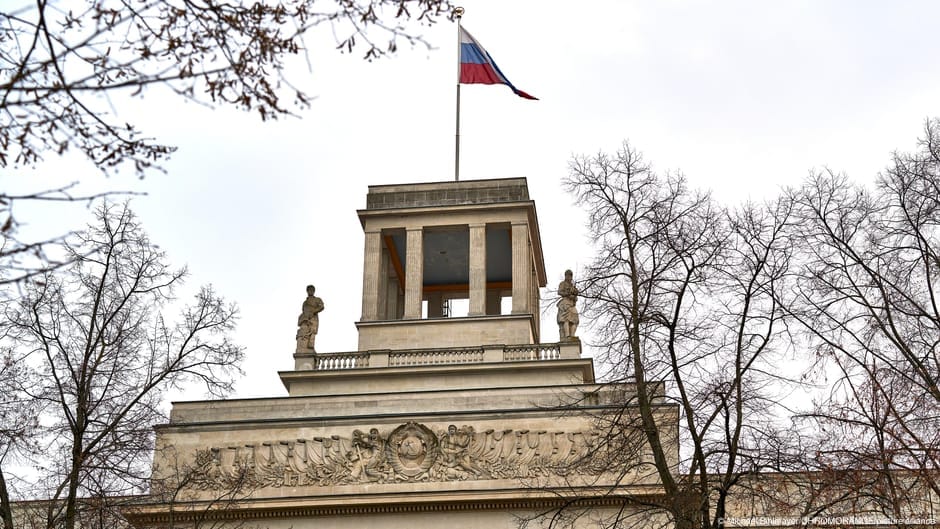
Germany’s political debate over Russia is increasingly carrying consequences beyond foreign and security policy, with public attitudes pointing to a durable geopolitical risk premium for Europe’s largest economy. A new Ipsos survey found that more than 60% of German voters regard Russia as a threat to their country, while 24% reject that assessment.
The poll, conducted from November 5 to 8 among 2,019 German citizens eligible to vote, was reported by Der Spiegel on Monday, November 16. Its results suggest that concern about military escalation remains firmly embedded in German public opinion even as voters remain divided over whether economic ties with Russia, particularly oil and gas imports, should eventually be restored.
For senior decision-makers, that combination matters. A broad perception of Russia as a security threat can sustain political support for higher defense expenditure, energy diversification and more resilient infrastructure. At the same time, disagreement over Russian energy creates uncertainty around the long-term direction of industrial and energy policy in a country whose competitiveness has historically been linked to access to imported fuel.
Security consensus masks deep political divisions
Views vary sharply according to party preference. More than 80% of voters supporting the conservative Christian Democratic Union and Christian Social Union bloc, the Social Democratic Party and Alliance 90/The Greens consider Russia a threat to Germany. The same view is held by 54% of respondents who voted for the Left Party.
Supporters of the far-right Alternative for Germany, or AfD, take a markedly different position. Only 26% said Russia poses a danger to Germany. Among AfD voters, 39% said they “completely disagree” with that proposition, while another 21% said they “tend to disagree.” A similar distribution of opinion was recorded among voters for the left-populist BSW, the Alliance for Social Justice and Reasonable Economic Policy founded by Sahra Wagenknecht.
Regional differences remain significant but less pronounced than the partisan divide. In western Germany, 65% of respondents consider Russia a threat regardless of political preference, compared with 53% in the east. The survey’s statistical margin of error is up to 2.2 percentage points.
Both the AfD and BSW are known for pro-Russian narratives. Even so, nearly 40% of their supporters agreed that Russia bears responsibility for the war against Ukraine. Across the full sample, 55% completely agreed with that statement, while a further 18% said they tended to agree. The finding indicates that skepticism toward current German policy does not necessarily translate into acceptance of Moscow’s account of the conflict.
Germany has a broad security consensus on the risks associated with Russia, but no comparable consensus on the future of bilateral economic relations.
Energy policy remains the central economic fault line
Respondents were almost evenly divided on whether Germany should resume imports of Russian oil and gas. Forty-four percent opposed such a move, 42% supported it and 14% were undecided. That narrow gap illustrates the difficult policy balance facing Berlin: security considerations favor continued diversification, while economic pressures can strengthen arguments for cheaper or more readily available energy supplies.
The split has potentially long-term implications for German industry and the wider European economy. If the prevailing threat perception continues to shape policy, businesses may need to plan around prolonged separation from Russian hydrocarbons and continued investment in alternative suppliers and energy systems. The result could be greater resilience but also persistent adjustment costs for energy-intensive sectors. The poll itself does not measure those costs, but it shows that any attempt to rebuild energy ties with Russia would face substantial public opposition.
Security agencies have added urgency to the debate. In recent months, German intelligence services have warned that Russia could begin testing NATO’s resolve and cohesion by 2030 through targeted operations on alliance territory. Reports that a war between Russia and Germany could begin within the next four years cause concern among 43% of respondents.
Anxiety is unevenly distributed. Half of the women surveyed said they were worried about such a conflict, compared with 37% of men. Age differences are also pronounced: 54% of respondents aged 18 to 29 expressed concern about war, versus 35% among those aged 60 to 75.
The elevated concern among younger Germans may influence the policy environment over a longer horizon, including attitudes toward defense budgets, public borrowing, civil preparedness and European strategic autonomy. For policymakers, the immediate challenge is to reconcile security commitments with pressure on households and businesses. For corporate leaders, the findings reinforce the case for treating geopolitical disruption, energy supply diversification and European defense policy as structural economic variables rather than temporary consequences of the war.



