Ukraine Seeks to Contain Economic Fallout After Strike in Libyan Waters
Kyiv says its operation targeted Russian military assets, as European governments warn that geographic escalation could destabilize Libya.
Ukraine has moved to contain the diplomatic and economic fallout from a military operation near Benghazi that sank a Russian corvette and damaged a cargo vessel, prompting condemnation from Libyan authorities and divergent responses from major European governments.
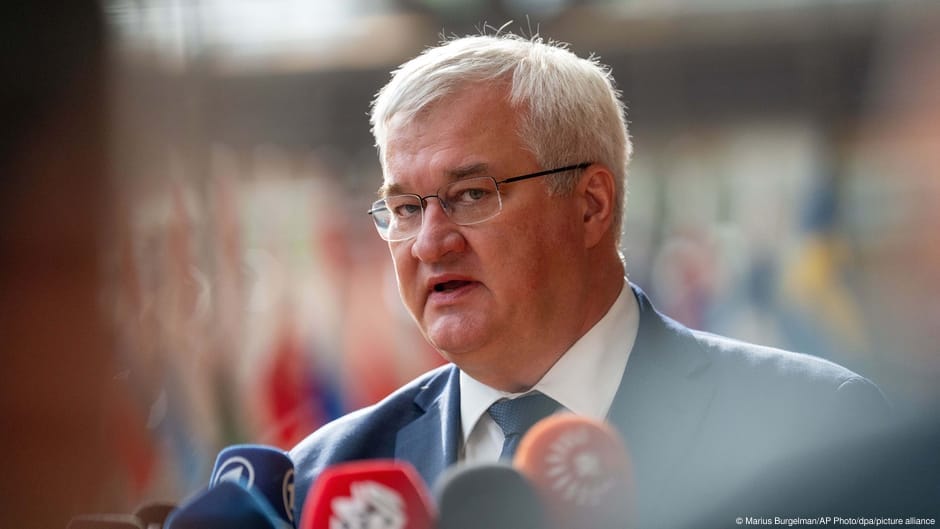
Ukrainian Foreign Minister Andrii Sybiha initiated a telephone call on Thursday, November 26, with Taher Salem Al-Baour, acting head of the foreign ministry in Libya’s internationally recognized government. Sybiha said Ukraine did not intend to transfer the war started by Russia to Libya or any other country.
The conversation followed an overnight operation on November 22 in which Ukraine sank the Russian warship Mercury in the port of Benghazi and struck a cargo ship near the port. Authorities governing eastern Libya said two Libyan service members died from their wounds.
The eastern administration, based in Benghazi, is not recognized by the United Nations and maintains close relations with Russia. Libya’s internationally recognized government is based in Tripoli, where Al-Baour serves. The competing authorities reflect the country’s continuing political division, making any foreign military action especially sensitive.
Sybiha said Ukraine’s actions concerned exclusively Russian military assets directly used in the war, while expressing regret over the unintended consequences and offering condolences to the Libyan people.
The Ukrainian minister also reaffirmed Kyiv’s full support for Libya’s sovereignty and territorial integrity, as well as efforts to reunify the country. That message sought to distinguish a targeted operation against Russian assets from any broader Ukrainian military involvement in Libya.
Escalation Adds Risk to a Strategically Important Region
For senior economic and policy decision-makers, the incident underscores the growing possibility that the Russia-Ukraine war could affect commercial routes and political calculations beyond Europe. Libya occupies a strategically important position in North Africa and the Mediterranean, and renewed security uncertainty around its ports could increase perceived risks for shipping, insurance and investment even if the confrontation remains limited.
Ukrainian President Volodymyr Zelensky described the drone operation off Libya as exemplary when he announced it on November 23. He said a Ka-27 helicopter aboard the Mercury was also destroyed. Zelensky added that the damaged dry cargo vessel, MV ANGARA, had been used by Russia to transport weapons.
Eastern Libyan authorities accused Ukraine of violating Libyan sovereignty and asked the United Nations to investigate the alleged presence of Ukrainian Armed Forces personnel in western Libya. The UN-recognized government in Tripoli also condemned the Ukrainian attacks, demonstrating that the operation drew objections from both sides of Libya’s political divide.
The competing reactions among European governments reveal a broader policy dilemma. France’s foreign minister, Jean-Noël Barrot, supported Kyiv’s actions, citing Ukraine’s right to self-defense and holding Russia responsible for the war’s widening geographic scope.
Italy, by contrast, told Ukraine that attacking Russian ships in Libyan waters was a mistake and warned Kyiv against extending the conflict into new territories. German Foreign Minister Johann Wadephul likewise stressed that a geographic expansion of the war was unacceptable.
Policy Divisions Could Complicate European Coordination
The disagreement matters economically because a common European approach is central to sanctions enforcement, security assistance and the management of Mediterranean risks. France’s position emphasizes the disruption of Russian military logistics wherever they support the war. Italy and Germany are giving greater weight to territorial containment and the danger that operations outside the established theater could create new diplomatic or security shocks.
Those approaches carry different long-term consequences. A broader interpretation of Ukraine’s right to self-defense could increase pressure on Russian supply networks and raise the cost of moving military equipment through third countries. It could also expose ports and transport corridors farther from the front line to greater security risks. A more restrictive approach could reduce the likelihood of regional spillovers but leave overseas logistics supporting Russia less constrained.
Libya’s internal fragmentation adds another layer of uncertainty. Russia’s close relationship with the eastern authorities, combined with the presence of an internationally recognized administration in Tripoli, means that foreign governments must navigate parallel power structures. The deaths of two Libyan military personnel also increase the political cost of treating such operations as isolated strikes against Russian assets.
Sybiha’s outreach indicates that Kyiv recognizes those risks and is attempting to prevent the operation from being interpreted as a new Libyan front. His support for Libyan reunification and sovereignty also addresses concerns that the attack could become entangled in the country’s internal divisions.
The immediate challenge for European policymakers will be to reconcile support for Ukraine’s self-defense with the objective of preventing a wider Mediterranean confrontation. For businesses and investors, the episode is a reminder that the war’s economic footprint is shaped not only by battlefield developments and sanctions, but also by the security of ports, shipping corridors and military supply chains extending across multiple regions.



