Trump, Putin and Xi Set for First Trilateral Talks at APEC Summit
The leaders are expected to open nuclear arms-control discussions with implications for strategic stability and the global economy.
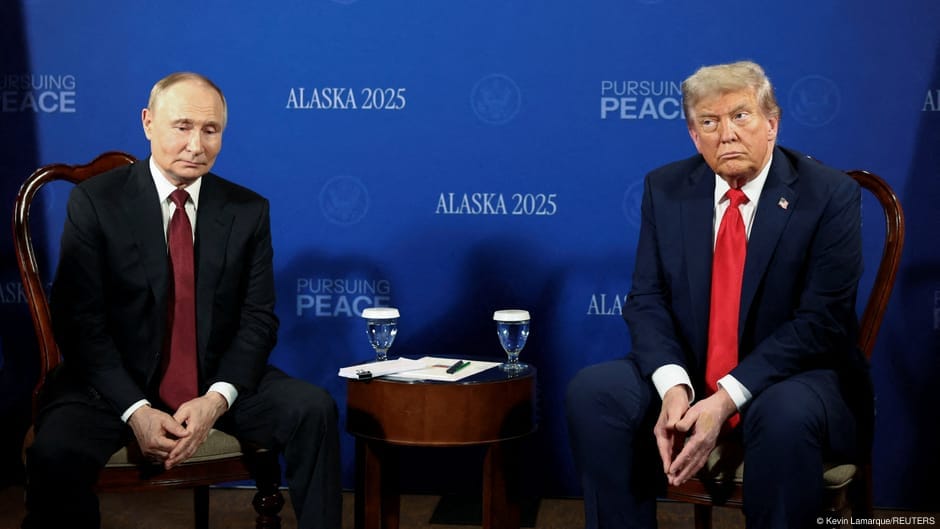
US President Donald Trump, Russian President Vladimir Putin and Chinese President Xi Jinping are set to meet on the sidelines of the annual Asia-Pacific Economic Cooperation summit in Shenzhen, the White House said, in what would be the first trilateral meeting among the leaders of the three countries.
The source report identifies November 19 as the meeting date, while its account of the White House announcement refers to Thursday, October 19. White House spokeswoman Olivia Wiles confirmed the planned encounter after information about it had previously appeared in the media.
The meeting would bring together the leaders of the world’s most consequential nuclear powers at a forum focused on economic cooperation. For senior policymakers and business leaders, that combination gives the talks significance beyond the immediate security agenda. Changes in relations among Washington, Moscow and Beijing can influence defense spending, trade policy, investment conditions and perceptions of geopolitical risk across the Asia-Pacific region and beyond.
Nuclear talks positioned as an initial step
According to Wiles, the principal subject of the unprecedented three-way meeting will be the development of a broad nuclear arms-control agreement. US officials are setting limited expectations for the encounter and do not anticipate that the leaders will conclude an agreement at the summit.
“We do not expect any agreement to be reached. I would characterize this as an initial stage, as a first conversation — at least at the leaders’ level — among these countries,” a senior US official told CNN.
The emphasis on an opening conversation suggests that the immediate economic impact may come through expectations rather than binding policy. Even a preliminary channel among the three leaders could affect assessments of long-term strategic stability, particularly if it establishes a basis for future arms-control negotiations. Conversely, an absence of subsequent progress would leave governments and companies facing continued uncertainty over military expenditure, sanctions exposure and geopolitical disruption.
The discussions may also address the US war against Iran and the situation surrounding North Korea, The New York Post reported, citing a Trump administration representative. Both issues carry potential consequences for energy markets, regional security and supply chains, although the report provides no details about the positions the leaders are expected to take.
Ukraine expected to remain outside the agenda
The leaders are unlikely to discuss ending the war in Ukraine, according to another US official quoted by the newspaper. The official argued that China is not a participant in that process and that discussing Ukraine in this setting would therefore be inappropriate. The official also said that no bilateral meeting between Putin and Trump is planned.
Keeping Ukraine off the formal agenda would narrow the summit’s immediate scope, but it also highlights the competing diplomatic frameworks surrounding the conflict. The war has had wide economic repercussions through sanctions, trade restrictions and changes in energy and defense policy. Decisions about who participates in negotiations therefore matter not only diplomatically but also for the credibility and durability of any future settlement.
In October, The Wall Street Journal reported that Putin had proposed holding a trilateral meeting with Trump and Xi during the APEC forum in China. According to that report, the Russian leader wanted to discuss terms for ending Russia’s war against Ukraine without representatives of the European Union or Kyiv taking part.
Trump said he was prepared to attend such a meeting but wanted its focus to be nuclear disarmament rather than the war in Ukraine. That divergence over the agenda appears to have been resolved in favor of strategic arms control, at least for the planned trilateral discussion.
China signals support for European participation
German President Frank-Walter Steinmeier said in an early-November interview with public broadcaster ARD that he had discussed the possibility of a trilateral summit with Xi during an official visit to China. According to Steinmeier, Xi stressed that China was not preparing for negotiations over Ukraine at the meeting.
“He specifically pointed out that this is a European conflict and that Europeans must be present at the negotiating table,” Steinmeier said.
Xi’s reported position aligns with the US official’s argument against placing Ukraine on the Shenzhen agenda, while rejecting a negotiating format that excludes European participants. For European governments, that distinction is economically important because they bear direct consequences from sanctions, security commitments and changes in regional energy and industrial policy.
The prospective summit consequently reflects two parallel policy tracks. One is an attempt to begin a three-power dialogue on nuclear weapons and other major security risks. The other is a decision, at least for now, to keep the Ukraine conflict within a process involving the parties and European stakeholders more directly connected to it.
No agreement is expected from the first conversation. Its longer-term importance will instead depend on whether the leaders establish a continuing mechanism for strategic dialogue. A sustained process could reduce uncertainty around nuclear competition and geopolitical escalation; a one-off encounter would offer markets and governments little basis for revising their long-range assumptions.



