Trump Pushes for Ukraine Deal Before Democrats Take Congress
A White House deadline tied to the 2027 congressional transition could reshape Western support for Kyiv and the economic outlook for Europe.
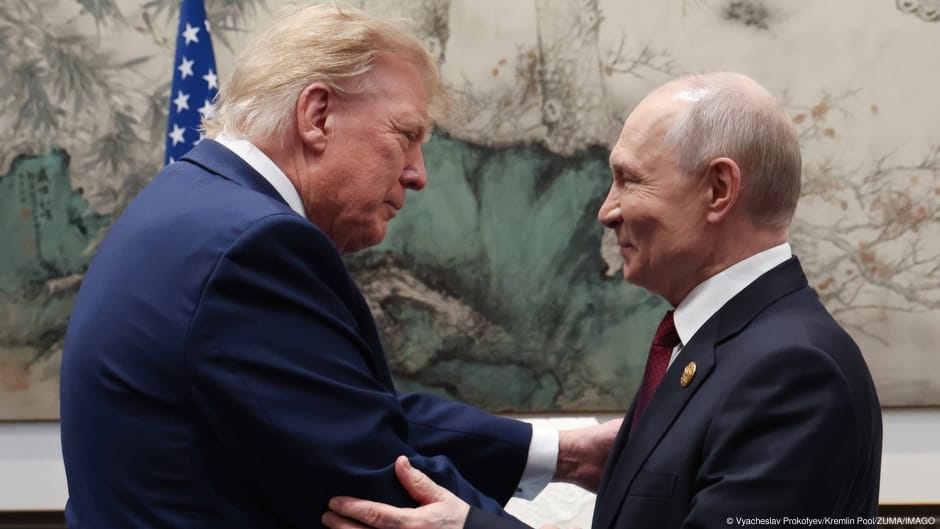
The White House is seeking a peace agreement between Ukraine and Russia by the end of 2026, before Democrats take control of both chambers of the US Congress in January 2027, according to four informed sources cited by the Financial Times. The reported deadline links diplomacy over Europe’s largest war in decades to a looming shift in Washington’s balance of power.
The Trump administration has communicated its desire for an agreement to European and Ukrainian officials, the newspaper reported. For senior policymakers and business leaders, the timetable matters because any settlement—or failure to reach one—could affect defense spending, energy markets, reconstruction plans and investor confidence across Europe.
One European official said the Americans were applying intense pressure and voiced concern that Ukraine could be required to make substantial concessions. Another source described an imbalance in urgency: Washington is rushing, while Russian President Vladimir Putin is not.
Military Support Becomes a Source of Leverage
Ukrainian officials interpreted another round of speed restrictions affecting Starshield, the military version of SpaceX’s Starlink satellite communications system, together with conspicuous delays in deliveries of missiles for Patriot air-defense systems, as part of a US effort to weaken Kyiv’s position. They believe Washington is using those measures to increase pressure for territorial concessions to Russia.
A senior Ukrainian official characterized the administration’s actions as a deliberate choice intended to help Russia obtain favorable terms in what are described as peace negotiations. Another Financial Times source said Trump likes Putin and wants the process completed before January.
The allegations highlight the economic consequences of using security assistance as negotiating leverage. Reduced access to communications and air-defense equipment could alter battlefield risks, increase uncertainty around Ukrainian infrastructure and complicate planning for governments and companies considering reconstruction investment. At the same time, a durable settlement could lower regional risk premiums and ease pressure on European public finances, although major territorial concessions could create longer-term political and security costs.
Trump Says Putin Wants a Diplomatic End
Trump said that bilateral talks with Putin on the sidelines of the Asia-Pacific Economic Cooperation summit in Shenzhen, China, convinced him that the Russian leader wanted to end the war through negotiations.
“I held a bilateral meeting with President Putin, who clearly expressed his desire to end the war between Russia and Ukraine through diplomatic means,” Trump said at a November 20 news conference after the summit, according to CNN.
The US president again attributed the difficulty of reaching an agreement to what he called the enormous hatred between Putin and Ukrainian President Volodymyr Zelenskyy. Trump described his own relationship with the Kremlin leader as fantastic and said Putin would like to end the war, while acknowledging that doing so was very difficult. During their meeting in China, Trump called Putin his friend.
Bloomberg reported that Trump subsequently called European leaders from Air Force One. They were gathered in Berlin for a meeting of the “coalition of the willing” with Zelenskyy. Trump told them that Putin wanted to end the war.
Moscow Signals Limited Room for Compromise
Recent statements from Moscow nevertheless indicate that Putin’s government remains unwilling to make fundamental concessions. Russian Deputy Foreign Minister Sergei Ryabkov said neither Ukrainian membership in NATO nor security guarantees modeled on the North Atlantic Treaty would be acceptable to Russia, even if Kyiv completely relinquished the Donbas.
Putin also said at a news conference in China that he had considered a possible partial ceasefire in the war but abandoned the idea after successful Ukrainian attacks on the Crimean Bridge.
“After the strikes on the Crimean Bridge, we will not negotiate,” Putin said.
The contrast between Washington’s political deadline and Moscow’s resistance to compromise raises the risk of an asymmetric negotiation. If Russia expects US leverage over Kyiv to increase as the congressional transition approaches, it may have an incentive to delay concessions while seeking more favorable terms.
Congressional Change Could Reset US Policy
Sources cited by The Kyiv Independent said Trump negotiators Steven Witkoff and Jared Kushner told Russian and Ukrainian officials at a recent meeting in Berlin that the current round of talks might be the final realistic opportunity to secure a peace agreement before Washington’s political environment changes.
Democrats intend to increase military assistance to Kyiv substantially from January, according to the available information. That prospect could reverse the pressure now being applied to Ukraine and strengthen its negotiating position, but it could also prolong uncertainty over sanctions, defense procurement and the eventual cost of rebuilding the country.
For global markets, the central issue is not simply whether an agreement can be announced before the congressional handover. Its durability would determine whether governments can reduce emergency defense and energy measures, whether displaced capital begins returning to Ukraine, and whether Europe can shift fiscal resources from wartime support toward reconstruction and productivity. A rushed accord that leaves core security disputes unresolved could instead preserve geopolitical risk and require high defense spending for years.



