Trump Orders Inquiry Into Democrats as Divided Government Takes Shape
The escalating confrontation raises the risk of policy paralysis after Democrats secured control of both chambers of Congress.
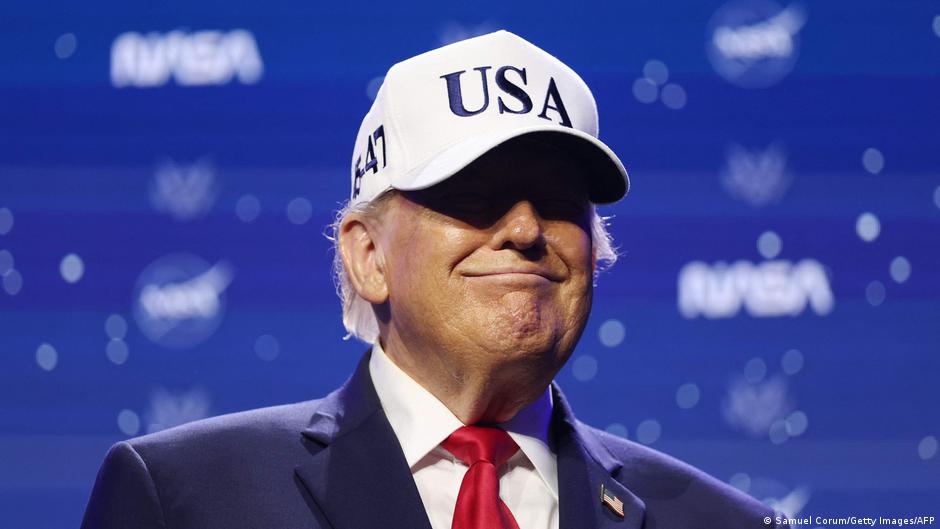
US President Donald Trump has directed the Justice Department to investigate Democratic Party members, accusing them of using threats of impeachment and other sanctions to pressure the attorney general and other public officials following their victory in the congressional midterm elections.
Trump announced the order on Saturday, November 7, through his Truth Social platform. He alleged that Democrats lacked legitimate grounds for their planned actions and were attempting to intimidate officials after winning control of Congress.
“This is blackmail at the highest level, and they must be punished,” Trump said.
The intervention signals an immediate escalation between the White House and the incoming congressional majority. For senior economic decision-makers, the central issue is whether the confrontation develops into prolonged institutional conflict that disrupts fiscal negotiations, regulatory policymaking and the federal government’s broader capacity to deliver a predictable economic agenda.
Divided Government Raises Policy Risks
Democrats secured majorities in both the House of Representatives and the Senate, giving the party extensive power to conduct oversight, launch parliamentary investigations and shape legislation. Some Democratic lawmakers have already said they intend to investigate alleged abuses of authority by Trump-appointed officials, including members of the president’s family.
Trump has said he is prepared to cooperate with Democrats despite the Republican defeat. He also publicly accepted the election results, easing earlier concerns among some Democrats that he might challenge or attempt to overturn the outcome, as he did after losing the 2020 presidential election.
That acceptance reduces one source of immediate political uncertainty, but the Justice Department order introduces another. Investigations involving elected lawmakers could deepen partisan mistrust and make bipartisan agreements harder to reach. The resulting uncertainty could affect expectations around taxation, federal spending, migration, trade and regulation, even before any formal policy changes occur.
Tensions have also intensified within the White House and the Republican Party after the electoral loss. Republican Representative Thomas Massie of Kentucky, a Trump critic, said he wants to bring the impeachment of Defense Secretary Pete Hegseth to a vote. The move indicates that congressional scrutiny may not follow purely partisan lines and could extend into the administration’s senior ranks.
Institutional Conflict Could Constrain Economic Governance
Trump further alleged that Democrats were threatening Republican donors with prison sentences because of their political beliefs. He also accused Michigan Senator Elissa Slotkin of planning to pursue young Americans for supporting the Republican Party. The source article provided no independent substantiation for those claims, which were presented as the president’s assertions.
The widening dispute matters economically because control of both chambers gives Democrats leverage over legislation and oversight while the executive branch remains under Trump. That balance can produce negotiated policy compromises, but it can also generate stalemate if investigations, impeachment threats and Justice Department inquiries dominate the political agenda.
For businesses and investors, sustained gridlock would complicate long-range planning. Fiscal measures may face longer negotiations, while politically sensitive appointments and regulatory initiatives could encounter greater resistance. The most consequential risk is not a single investigation but a persistent erosion of coordination between institutions responsible for budgeting, enforcement and economic policy.
The confrontation may also influence global perceptions of US policy reliability. International partners typically assess not only the stated priorities of an administration but also its ability to secure legislative support and implement decisions. A Congress focused on investigations and a White House pursuing political opponents through the Justice Department could narrow the space for durable agreements and reduce confidence in policy continuity.
Miller Appointment Points to a Harder Policy Line
On the eve of Trump’s announcement, the president appointed Stephen Miller as White House chief of staff. Miller is an advocate of restrictive immigration policies and a firm national-conservative agenda. The appointment was perceived as a challenge to Democrats and suggests that Trump may respond to the loss of congressional control by consolidating the administration around a more confrontational political strategy.
Migration policy is particularly relevant to the macroeconomic outlook because changes in labor supply can influence employment conditions, production capacity and longer-term growth. The source did not specify new measures, but Miller’s appointment reinforces expectations that restrictive migration policy will remain a central White House priority even as Democrats gain greater congressional power.
The emerging configuration therefore combines formal recognition of the election result and a stated willingness to cooperate with a rapid escalation in legal and political pressure. Whether cooperation or confrontation prevails will determine how effectively Washington can manage fiscal decisions and other policy priorities. The initial signals point to a period of elevated institutional volatility, with consequences extending beyond domestic politics to global confidence in US economic governance.



