Trump Backs Kyiv’s Role as Great-Power Diplomacy Tests Policy
The US president’s pledge not to decide Ukraine’s future without Kyiv highlights the limits of a new trilateral diplomatic format.
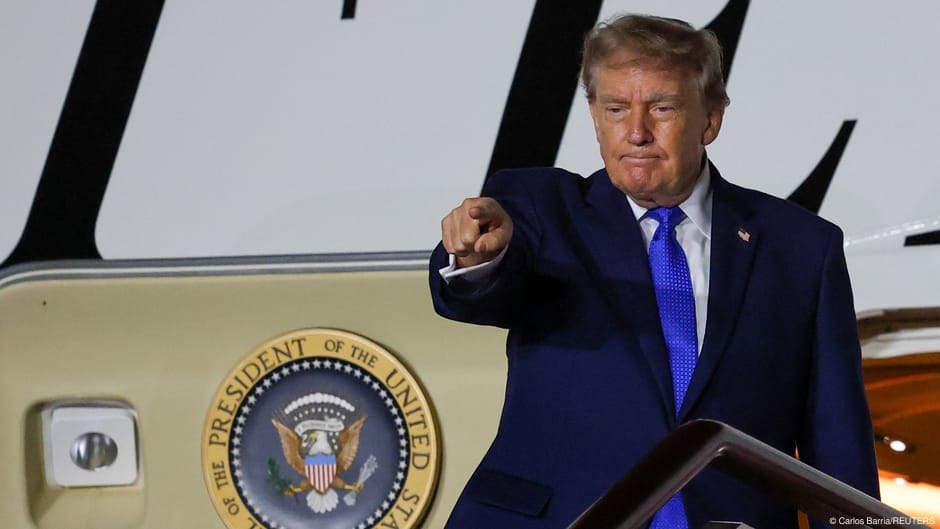
US President Donald Trump said he agreed with Ukrainian President Volodymyr Zelensky that Washington should not make decisions about Russia’s war against Ukraine without Kyiv’s direct participation, setting an important boundary around emerging great-power diplomacy involving the United States, China and Russia.
In an interview with NBC on Thursday evening, November 19, Trump endorsed Zelensky’s position and said he would not act without the Ukrainian leader. “I agree with him. I wouldn’t do anything without him — after all, he is the head of that country, so I wouldn’t do that,” Trump said, according to NBC journalist Gabe Gutierrez, who reported the remarks on X.
The statement is significant for governments and markets assessing whether closer engagement among Washington, Beijing and Moscow could produce a rapid geopolitical bargain. By explicitly recognizing Kyiv’s role, Trump indicated that discussions among the three major powers would not, by themselves, constitute a settlement framework for the war.
Trilateral diplomacy broadens the policy agenda
Gutierrez also said he discussed Trump’s recent meeting in China with Chinese President Xi Jinping and Russian President Vladimir Putin. Trump gave the talks an emphatically positive assessment: “I think it was a 12. On a scale of zero to 10. Everything went great. We managed to build an amazing relationship.”
Ukraine was at the center of the trilateral meeting in Shenzhen, Trump said, although the leaders also discussed the “conflict around Iran.” According to the US president, the leaders wanted the situation involving Iran to be resolved and were conveying that position to Tehran “in the strongest possible terms.”
The breadth of the agenda suggests that the new format is intended to address multiple sources of geopolitical risk rather than a single conflict. For senior economic decision-makers, sustained dialogue among the world’s largest strategic powers could affect expectations around energy security, trade routes, defense expenditure and investment risk. Yet the absence of announced operational measures limits the immediate economic impact of the talks.
“I wouldn’t do anything without him — after all, he is the head of that country.”
During the NBC interview, Trump also said Putin had been upset by Ukrainian strikes on the Crimean Bridge, which caused parts of its structure to collapse. Trump described the Russian president’s reaction as “understandable.” The comment underscores the continuing military pressures surrounding the diplomatic initiative and the risk that battlefield developments could complicate negotiations.
Historic meeting yields limited public detail
The first trilateral meeting in history among the leaders of the United States, China and Russia took place earlier that day in Shenzhen on the sidelines of the Asia-Pacific Economic Cooperation summit. Before the meeting, Trump said it would “go down in history.” Xi described it as an event of “historic significance.” Putin said the three countries had “many overlapping interests” in resolving regional conflicts, including the conflict in Ukraine.
Despite those declarations, the meeting lasted only about 90 minutes. The participants departed without delivering a joint statement to the press. Xi characterized the negotiations as “positive and constructive,” while Russian presidential aide Yuri Ushakov described the atmosphere as “good.”
The short duration and lack of a joint press appearance leave uncertainty over how far the three governments moved beyond broad political signaling. This distinction matters economically: durable changes in sanctions, commodity flows, financial restrictions or defense planning would require more detailed agreements, implementation mechanisms and coordination with other affected states.
A joint “Declaration of Peace” by the leaders of the United States, Russia and China was nevertheless published after the summit. Its principal points included support for reforming the United Nations, agreement that the International Criminal Court had “not abused its powers,” and a commitment to continue dialogue on reducing nuclear risks and preventing nuclear proliferation.
The declaration did not mention the war in Ukraine. That omission contrasts with Trump’s statement that Ukraine dominated the Shenzhen discussions and reinforces the gap between the meeting’s diplomatic symbolism and its formal output. It also suggests that the three powers were able to identify common ground on institutional reform and strategic stability without reaching a jointly publishable position on the war.
Economic consequences depend on implementation
Trump’s support for Ukraine’s direct involvement may reassure Kyiv and European governments concerned that decisions could be negotiated over Ukraine’s head. It also makes any future settlement process institutionally more complex, because an agreement would need to reconcile the positions of the combatants with the strategic priorities of Washington, Beijing and other stakeholders.
For policymakers and corporate leaders, the immediate takeaway is caution. The Shenzhen meeting created a high-level channel among three powers capable of influencing security conditions, nuclear risk and the international institutional order. However, it did not produce a public pathway for ending the war, nor did its declaration address Ukraine.
The longer-term economic consequences will therefore depend on whether the new dialogue leads to concrete policy shifts. Progress could reduce geopolitical risk premiums and improve visibility for energy, logistics and capital allocation. Failure to translate political engagement into enforceable arrangements would leave sanctions uncertainty, military spending pressures and regional disruption largely unchanged.



