Russian Strikes Deepen Ukraine’s Energy and Industrial Disruption
Fatal attacks in the Kyiv and Odesa regions have damaged civilian assets and intensified power restrictions across Ukraine.
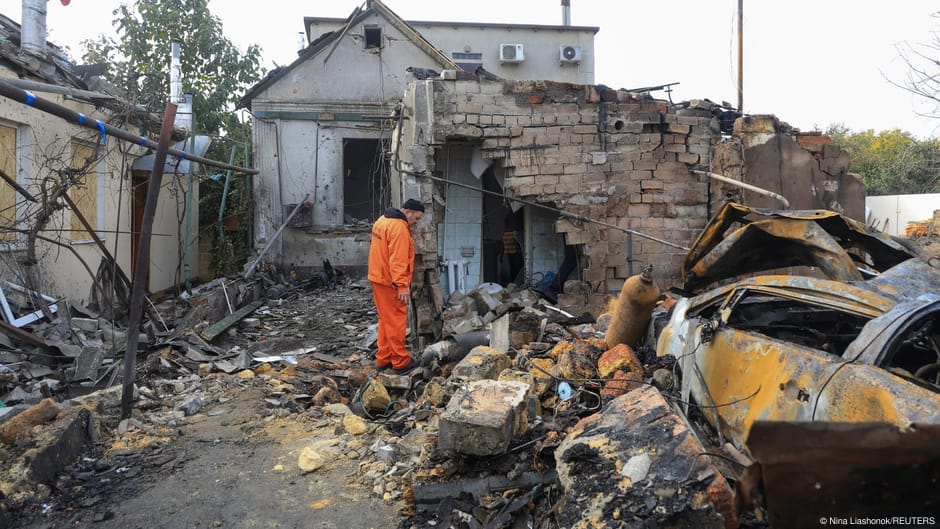
Russian attacks on Ukraine have killed three people in the Kyiv and Odesa regions, wounded three others and damaged civilian and critical infrastructure, adding to the pressure on the country’s energy system and industrial economy.
One person was killed in Bila Tserkva, a city in the Kyiv region, during a Russian attack overnight into Wednesday, November 25, according to the city council. Authorities said the strikes affected critical infrastructure as well as civilian businesses, including an Epicentr shopping center and a Nova Poshta branch.
In the Odesa region, shelling on the evening of November 24 killed a 41-year-old man and a 17-year-old boy, regional military administration head Oleh Kiper said on Telegram. Three other people were wounded, including a 12-year-old child.
“Civilian infrastructure facilities, a private house, an industrial building and passenger cars were damaged,” Kiper said.
The casualties underscore the human cost of the attacks, while the damage to commercial, industrial and logistics assets illustrates their broader economic reach. Shopping facilities, postal networks, production buildings and vehicles form part of the infrastructure that supports household consumption, business activity and the movement of goods. Their disruption compounds the direct losses arising from attacks on the energy system.
Power restrictions widen the economic impact
Ukraine’s electricity transmission system operator, Ukrenergo, said scheduled power cuts would remain in effect around the clock in parts of the country on November 25 because of Russian attacks on the energy system.
Industry will be subject to power-limitation schedules, while all categories of consumers will face hourly outage schedules ranging from 0.5 to three groups, according to the operator’s statement. The Ukrainian online publication Ekonomichna Pravda explained that one group corresponds, by approximate calculations, to about four hours without electricity per day. A restriction covering three groups could therefore mean around 12 hours without power if maintained throughout the day.
For businesses, the distinction between household outages and industrial capacity restrictions is economically significant. Limits on available power can interrupt production schedules and constrain the use of machinery, while prolonged uncertainty complicates operational planning. The effects extend beyond directly damaged facilities because companies that remain physically intact may still be unable to operate normally when electricity supplies are restricted.
Emergency outages were also introduced on the evening of November 24 on Ukrenergo’s instructions in Dnipro and the Dniprovskyi, Pavlohradskyi, Synelnykivskyi and Samarivskyi districts of Ukraine’s Dnipropetrovsk region, journalists reported. The move indicates that the strain on the power system was not confined to the regions where fatalities and physical damage were reported.
Energy, transport and supply chains under pressure
Russia’s Defense Ministry said on Telegram on the morning of November 24 that overnight drone strikes had targeted energy and fuel infrastructure as well as vessels being used in the interests of the Ukrainian armed forces. According to the ministry, one target was a dry cargo ship sailing southwest of Odesa that was carrying what it described as military-purpose cargo.
The Russian statement and the Ukrainian reports together point to pressure across several connected parts of the economy: electricity generation and transmission, fuel infrastructure, maritime transport, civilian logistics and industrial production. Odesa’s role as a maritime center makes attacks in and around the region relevant not only to local activity but also to the functioning of trade routes and supply networks.
The longer-term economic consequences will depend partly on the duration and frequency of the power restrictions. A short outage can delay activity, but repeated interruptions can reduce output, raise operating costs and force businesses to reorganize working hours around electricity availability. Damage to postal branches, retail sites, homes and vehicles also spreads the burden across companies and households rather than concentrating it within the energy sector alone.
For senior decision-makers, the latest attacks demonstrate how physical destruction and electricity shortages can reinforce one another. Damage to critical infrastructure creates immediate repair needs, while restrictions on industrial power can impede the wider economy’s ability to maintain output. At the same time, damage to civilian businesses and transport assets weakens the commercial networks needed to distribute goods and support recovery.
The scheduled and emergency cuts reported across multiple regions show that local strikes can generate broader system-wide effects. With some consumers potentially facing up to roughly half a day without electricity under the most restrictive announced schedule, energy availability remains a central constraint on Ukraine’s near-term economic resilience and industrial continuity.



