Nvidia Probes CEO’s Reported Affair Amid China Security Concerns
The independent review puts corporate governance and national security scrutiny at the center of the US-China contest for AI leadership.
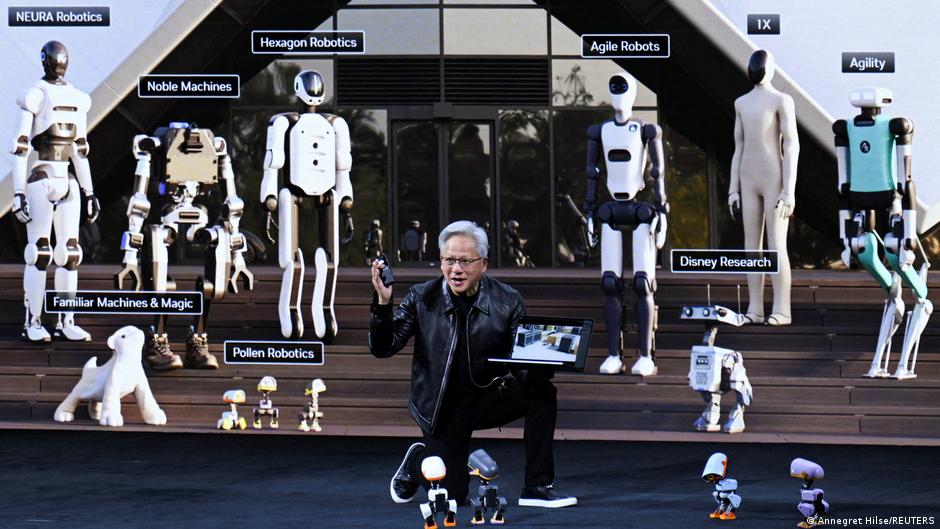
Nvidia’s board has opened an independent investigation into reports that chief executive Jensen Huang had a romantic relationship with a woman suspected by US intelligence agencies of working for Chinese intelligence, placing one of America’s most strategically important technology companies under heightened scrutiny.
The company, the largest US chipmaker, announced the investigation on Sunday, November 8. Nvidia said its board currently lacked sufficient grounds to suspect that confidential information had been disclosed or that US national security had been threatened. Nevertheless, directors commissioned an independent examination of all available information.
Huang intends to remain in charge of Nvidia while the review proceeds, according to the company. His continued leadership preserves management continuity at a company central to the global artificial intelligence industry, but the investigation creates a significant governance test as governments increasingly treat advanced semiconductor technology as a strategic asset.
Governance issue carries strategic economic weight
In an internal memorandum to employees, Huang admitted to the affair and said he “deeply regrets” being unfaithful to his wife. He acknowledged the consequences for his family and accepted responsibility for his conduct.
“My actions caused pain to her and our children. There is no excuse for what I did. I hope our family recovers from what happened and that, over time, I can regain their trust.”
Huang also said he intended to protect Nvidia and support US national security. The statement directly connects the personal controversy with the wider strategic responsibilities attached to his position. Nvidia’s technology is used to train and operate modern AI models, build supercomputers, expand cloud infrastructure and process large volumes of data.
The investigation therefore extends beyond the conventional corporate risks associated with executive conduct. For senior decision-makers, it highlights how leadership, information security and geopolitical policy have become increasingly intertwined in sectors that governments consider critical to economic competitiveness and national security.
The New York Times previously reported that Huang had entered a relationship with Alice Huang, who is not related to him despite sharing his surname. She heads Megaspeed, a Singapore-based company that operates data centers and purchases Nvidia chips.
According to sources cited by the newspaper, US intelligence agencies had placed Alice Huang under surveillance because they believed she had been recruited by China’s Ministry of State Security. President Donald Trump was reportedly informed about the surveillance approximately a year ago.
However, journalists were unable to establish what information Alice Huang might have provided to Beijing or how valuable any such material might have been. China previously rejected the espionage allegations involving Nvidia’s chief executive, describing them as “baseless speculation.” Nvidia’s board has likewise said that the information presently available does not provide adequate grounds to conclude that secrets were leaked.
AI supply chains face intensified policy scrutiny
The case arrives as Nvidia occupies a pivotal position in the economic and technological rivalry between Washington and Beijing. Its processors provide essential computing capacity for AI development and are also used in cloud services, supercomputing and data-intensive applications. That role has made access to Nvidia technology an important policy issue rather than a matter of ordinary commercial supply.
The White House considers China’s access to US-made advanced chips a national security concern and has subjected the technology to export restrictions. The reported relationship, involving an executive at a Singapore-based data-center operator that buys Nvidia products, may consequently draw attention to the governance of international customers and the security controls surrounding strategically sensitive supply chains.
The investigation does not itself establish any breach of export rules, disclosure of protected information or threat to national security. Its economic importance lies instead in the degree of confidence required around companies that sit at the center of global AI infrastructure. Even unproven concerns can increase pressure on boards to demonstrate strong oversight, independent review procedures and effective safeguards for commercially and strategically sensitive information.
For governments, the episode underscores the difficulty of separating industrial policy from corporate governance in the semiconductor sector. Export controls are designed to limit access to advanced computing capabilities, but their effectiveness also depends on companies monitoring customers, commercial relationships and potential channels through which sensitive knowledge or technology could move across borders.
For Nvidia, the immediate challenge is to establish whether the affair had any implications for confidential information, customer dealings or US security interests while maintaining operational stability. The board’s decision to conduct an independent review signals that the company recognizes the broader stakes, even as it says there is currently no sufficient basis for suspecting a security breach.
The longer-term consequence may be more intensive scrutiny of leadership conduct and risk management across strategically important technology companies. As AI becomes a larger source of productivity, investment and geopolitical leverage, the governance standards applied to leading chipmakers are likely to carry implications well beyond their shareholders.



