Lithuania Urges EU Terror Listing for Russian Military Intelligence
The proposal could widen Europe’s security response to Russian operations and raise the economic costs of regional confrontation.
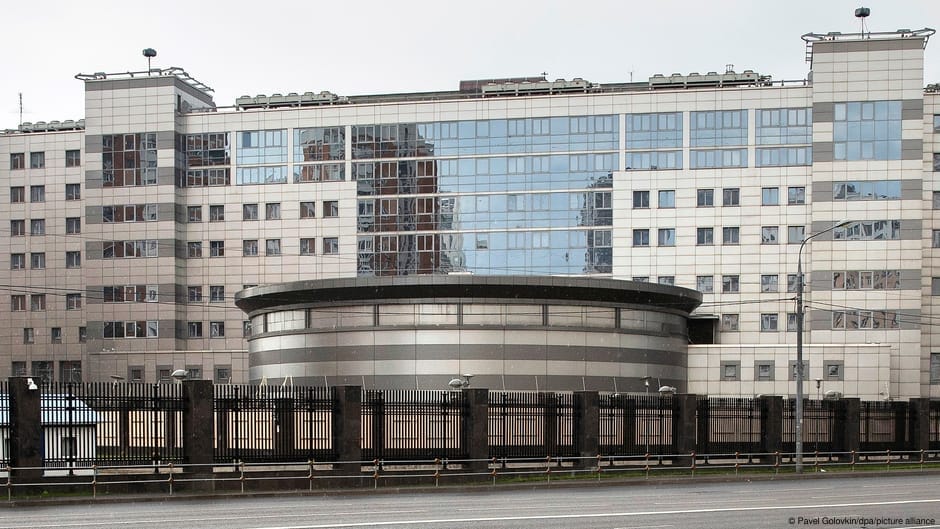
Lithuanian Foreign Minister Kęstutis Budrys has called on the European Union to designate the Main Directorate of the General Staff of the Russian Armed Forces as a terrorist organization, a move that would represent a significant escalation in Europe’s policy response to alleged Russian operations across the continent.
Budrys made the proposal in an interview with the German newspaper Die Welt published on Wednesday, November 25. He argued that Russian military intelligence “terrorizes” European societies, decision-makers and other private individuals.
The Lithuanian minister said the initiative was not connected to Lithuania’s forthcoming presidency of the Council of the European Union. Instead, he presented it as a response to what Baltic governments describe as an intensifying pattern of disruptive operations attributed to Russian security services.
Budrys compared the Russian military intelligence directorate with Iran’s Islamic Revolutionary Guard Corps, the elite Iranian military and political organization that the EU designated as a terrorist organization in early 2026. His comparison indicates that Lithuania is seeking a similarly forceful legal and political framework for dealing with Russian state bodies accused of conducting sabotage and intimidation abroad.
From hybrid threats to economic security
For European policymakers and business leaders, the proposal carries implications beyond diplomatic terminology. A terrorist designation could alter the risk environment surrounding trade, finance, transport, critical infrastructure and cross-border investment. The precise economic consequences would depend on the measures ultimately adopted by the EU, but the debate itself signals that security policy is becoming more deeply embedded in European economic decision-making.
Budrys argued that Europe should stop treating the alleged actions simply as hybrid warfare and should instead regard them as a form of unconventional war. He also raised the possibility that such activity could cross the threshold contemplated by Article 5 of the North Atlantic Treaty, which concerns collective defense.
“We must make it clear to Russia that its actions against us are no longer merely ‘hybrid warfare,’ but rather ‘unconventional warfare,’ and that such actions may well cross the threshold provided for in Article 5 of the North Atlantic Treaty,” Budrys said.
That framing would increase pressure on European governments to coordinate security, defense and economic policy more closely. If alleged sabotage is treated as a strategic threat rather than an isolated criminal matter, governments may face demands for higher spending on border controls, infrastructure protection, intelligence capabilities and supply-chain resilience. Companies operating in sensitive sectors could likewise encounter tighter compliance requirements and higher security costs.
Baltic states press for a harder EU response
The Lithuanian initiative follows an announcement by Estonia on November 15 that it would close all border crossings with Russia beginning the following month. Estonian authorities accused Russian special services of attempting to cause an explosion and fire at Threod Systems, a company that manufactures drones and electro-optical intelligence and surveillance systems.
Budrys supported Estonia’s position on the same day and accused Russia of “state terrorism.” Writing on the social media platform X, he said Europe should abandon euphemistic language and seriously consider designating the GRU and other Russian intelligence and security structures involved in sabotage operations as terrorist organizations.
He also called for stronger support for Ukraine, greater pressure on Moscow and “real consequences” for those who order and carry out such attacks. Taken together, those demands point toward a broader Lithuanian strategy: expanding assistance to Kyiv while increasing the legal, political and potentially economic penalties associated with Russian activity in Europe.
For the EU, the central policy question is whether member states can agree on a common classification of actions attributed to a foreign state’s military intelligence service. Such a decision would carry consequences for the bloc’s relations with Moscow and could deepen the separation already shaping Europe’s security and economic landscape.
The dispute also highlights the rising strategic importance of companies working in drones, surveillance technology and other dual-use capabilities. Alleged attacks on such businesses can affect production, insurance, investment decisions and the continuity of supply to defense customers. Border closures may add further friction for transport and communities connected to cross-border movement, even when governments regard those costs as necessary for national security.
Budrys’s intervention therefore places a legal designation within a larger economic and strategic debate. Europe is being asked to determine how far it is prepared to integrate counterterrorism mechanisms, collective defense considerations and economic pressure into its response to alleged Russian operations. Any eventual EU decision could shape long-term spending priorities, corporate risk assessments and the bloc’s approach to economic security.



