Kyiv Seeks Unified European Position for Potential Talks With Russia
Ukraine is preparing a potentially historic coalition meeting as it seeks a stronger European role in negotiations and sustained military support.
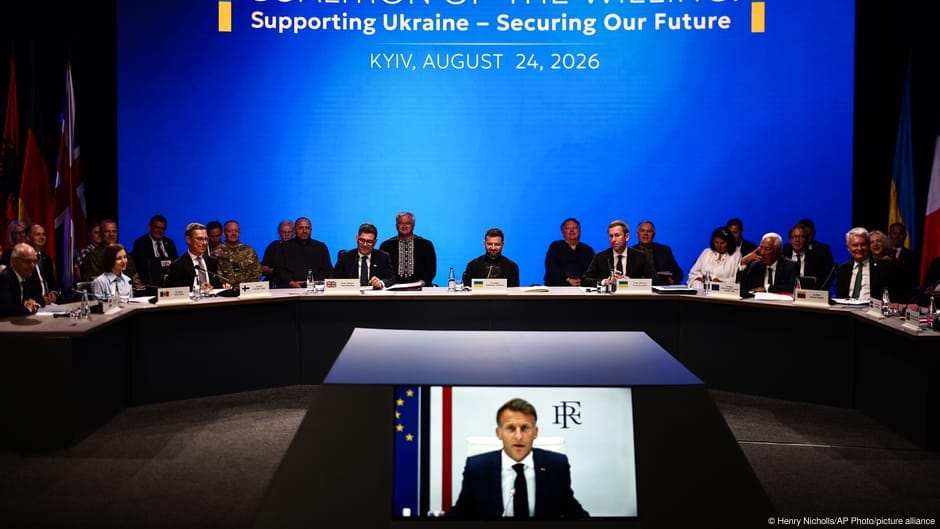
Kyiv is preparing a meeting of countries supporting Ukraine that it hopes will establish a unified European position for potential negotiations with Russia, while elevating Europe into a full participant in the diplomatic process.
Ukrainian President Volodymyr Zelensky outlined the initiative in a video address published on Sunday, November 15. He described the forthcoming gathering of the “coalition of the willing” as an important event that could prove historic, although he did not clarify whether he meant the coalition meeting expected in Berlin on November 19 or a separate summit now being planned.
“We can determine a 100 percent strong European position for negotiations,” Zelensky said, arguing that a process involving Ukraine, the United States and Russia should become not merely a four-party format but one that is substantially stronger.
The coalition comprises 37 countries, predominantly European states and countries providing military assistance to Ukraine as it resists Russia’s full-scale invasion. France, the United Kingdom and Germany are regarded as the group’s informal leaders.
Europe Seeks Greater Weight in the Negotiating Framework
For European governments, the effort carries implications extending beyond the immediate diplomacy of the war. A consolidated position could give Europe greater influence over decisions affecting its security architecture, defense spending, energy resilience and fiscal priorities. It could also reduce the risk that individual capitals approach negotiations with conflicting objectives or different assessments of the economic cost of continued confrontation.
Kyiv’s proposal indicates that European participation would be intended to strengthen, rather than simply enlarge, the negotiating structure. The distinction matters for senior policymakers because the composition of any future talks could shape sanctions policy, reconstruction commitments, security guarantees and the long-term allocation of defense resources across the continent.
The initiative comes as governments supporting Ukraine face the challenge of converting numerous wartime partnerships into mechanisms capable of delivering measurable results. Zelensky said Kyiv is conducting a review of other coalitions established to assist the country, assessing which are fulfilling their mandates and which remain, in his words, “empty.” He said Ukraine would work to give those arrangements greater substance.
These coalitions include both formal agreements among Kyiv’s allies and informal groupings or initiatives created after the beginning of Russia’s full-scale war. Some have operated under defined institutional structures, while others have lacked formal rules or a regular working process.
The IT Coalition, for example, was established within the Ukraine Defense Contact Group, commonly known as the Ramstein format. It was created to support Ukraine in cybersecurity and digital technologies and remains active. By contrast, the “tank coalition,” a term previously used in media coverage and by Ukrainian representatives, did not exist as a formal organization in practice.
The review suggests Kyiv is seeking to distinguish durable delivery platforms from political labels. From a macroeconomic perspective, more effective coordination could improve the predictability of allied assistance, reduce duplication and help governments plan multiyear expenditure on defense production, infrastructure and technological support. The source statement, however, did not provide figures for future commitments or identify which coalitions could be restructured.
Energy Resilience and Air Defense Remain Immediate Priorities
Zelensky also said Kyiv had reached an agreement with European Commission President Ursula von der Leyen on additional energy support. The assistance is intended for cities and communities experiencing the greatest difficulties and is expected to include extra generators, other equipment and financing to sustain resilience.
Energy support has a direct economic dimension because reliable electricity and heating are essential to industrial output, public services and household stability. Assistance targeted at heavily affected communities can help limit disruption to local economies and reduce pressure on municipal budgets, although Zelensky did not specify the value, timing or geographic distribution of the package.
Ukraine is also looking to an upcoming meeting of allies in the Ramstein format for approval of new air-defense missile deliveries. Zelensky said the meeting needed to produce results and would send Russia a strong signal that Ukraine would not be left without support.
Kyiv’s priorities are air defense, with partners being asked to focus on missiles for Patriot and NASAMS systems. Continued supplies would support the protection of population centers and critical infrastructure, including the energy assets underpinning economic activity.
Taken together, the coalition meeting, the review of support mechanisms and the requests for energy and air-defense assistance point to a broader attempt by Kyiv to make international backing more coordinated and operationally effective. For Europe, the long-term consequence could be a more institutionalized role in both wartime support and any eventual negotiating framework, with corresponding effects on defense policy, public finances and the continent’s strategic relationship with Russia and the United States.



