Kamyshuvakha Strike Toll Reaches 72 as Humanitarian Risks Mount
The attack underscores the growing economic and operational costs of delivering humanitarian aid in conflict-affected areas of Ukraine.
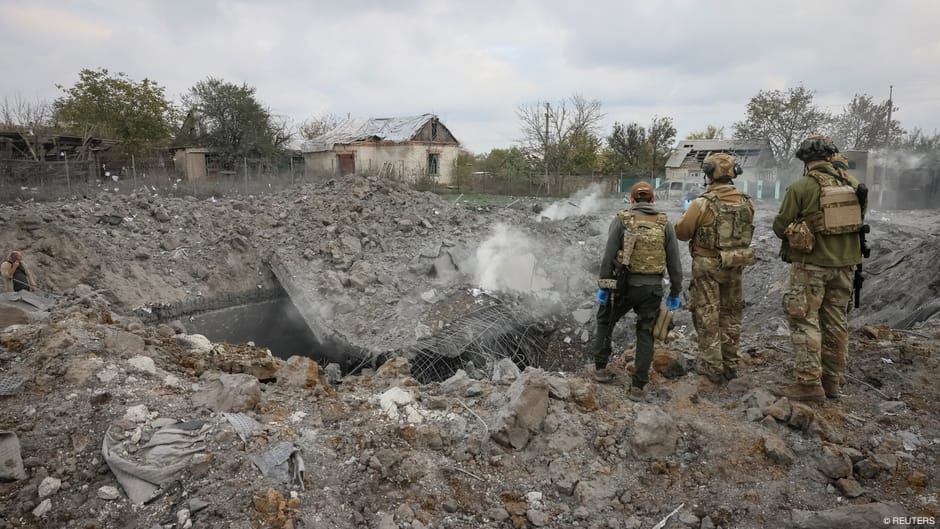
Rescue workers have completed a two-week search through the rubble of a humanitarian aid center in Kamyshuvakha, in Ukraine’s Zaporizhzhia region, confirming that 72 people were killed by a Russian airstrike. Four others remain missing, while four injured people are still receiving hospital treatment.
The final toll makes the November 2 strike one of the deadliest Russian attacks on civilians at a single location since the start of the full-scale war against Ukraine. Beyond the immediate human cost, the attack highlights the widening economic burden of sustaining humanitarian operations in areas exposed to repeated bombardment, where the delivery of essential supplies increasingly requires significant security, emergency-response and reconstruction resources.
Rescue teams recovered 58 bodies from the remains of the building struck by an aerial bomb. One person later died in hospital, while DNA testing confirmed the deaths of another 13 people. The victims included two rescue workers and four police officers, according to Ukrainian Interior Minister Ivan Vyhivskyi.
The Zaporizhzhia regional military administration said four people were still officially listed as missing when the search operation ended on Monday, November 16, two weeks after the attack.
Repeated strikes compound the cost of emergency operations
Russian forces dropped aerial bombs on the building of a disused school in Kamyshuvakha on the morning of November 2, according to Ukrainian Prime Minister Serhii Koretskyi. Humanitarian assistance was being distributed at the location at the time.
Koretskyi said that after people moved into a shelter, Russian forces also struck that shelter, using nine aerial bombs. The attack occurred during the distribution of aid, contributing to the high number of casualties. Information about the humanitarian event had been announced officially in advance.
The risks did not end with the initial bombardment. During the two weeks of search-and-rescue work, Kamyshuvakha came under 11 further Russian attacks, local authorities said. Nine of those strikes directly targeted the site where emergency personnel were clearing rubble. Three police officers and four rescue workers were injured in the subsequent attacks.
For policymakers and senior economic decision-makers, the episode illustrates how repeated strikes can multiply the cost of a single attack. Resources must be committed not only to medical treatment, victim identification and debris removal, but also to protecting emergency crews and maintaining humanitarian supply channels under continuing fire. Injuries among police and rescue personnel further constrain the public-sector capacity available for other emergency and civilian needs.
Humanitarian access carries broader economic consequences
Humanitarian distribution points are part of the basic support infrastructure for populations living in war-affected areas. When such facilities become unsafe, the consequences extend beyond the destruction of an individual building. Aid operations may require more dispersed delivery systems, additional security precautions and greater logistical redundancy, increasing the resources needed to reach the same number of people.
The strike also demonstrates the long-term pressure placed on regional administrations. The loss of a former school building, the deployment of rescue services for two weeks and the continued hospitalization of survivors all add to demands on local institutions already operating during wartime. Repeated attacks on the recovery site can prolong those demands and delay a return to normal civilian activity.
Measured by the number of civilians killed at one location, the Kamyshuvakha attack ranks among Russia’s deadliest strikes since the full-scale invasion began. Several media organizations have compared it with Russia’s bombing of the Mariupol Drama Theatre in March 2022, although no confirmed casualty figure exists for that attack.
Russia has not commented on the strike against the humanitarian center. The United Nations condemned the actions of the Russian military and raised questions about compliance with international humanitarian law.
“Either the Russian armed forces were aware that humanitarian aid was being distributed there, or they failed to take the most basic steps to determine what was happening in the settlement they intended to attack. In either case, this strike appears to have violated the most fundamental principles of international humanitarian law,” said Danielle Bell, head of the UN Human Rights Monitoring Mission in Ukraine.
The findings intensify scrutiny of the protections afforded to humanitarian activities and emergency personnel. They also point to a persistent policy challenge for Ukraine and its international partners: maintaining civilian support systems while the locations used to distribute aid, shelter residents and conduct rescue work remain vulnerable to attack.
Over the longer term, such incidents can deepen the fiscal and operational demands associated with the war. Humanitarian relief, medical care, public safety and reconstruction compete for limited personnel and funding, while repeated damage raises the cost of keeping essential services functioning. In Kamyshuvakha, the two-week recovery effort and the attacks directed at the rubble-clearing site show how the economic consequences of a strike can continue well after the initial destruction.



