EU Fiscal Test in Bulgaria Signals Tougher Post-Reform Enforcement
Brussels is seeking sanctions over Bulgaria’s widening deficit, testing the credibility of the EU’s more flexible fiscal framework.
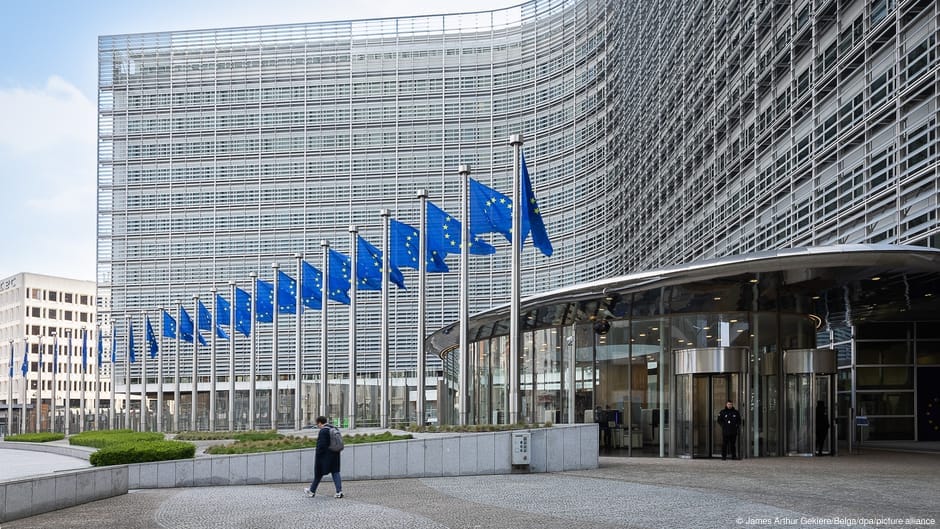
The European Commission is preparing to ask EU finance ministers to impose a penalty on Bulgaria under the Excessive Deficit Procedure, marking a potentially significant escalation in the bloc’s enforcement of its fiscal rules. The Commission announced its intention on Tuesday, November 24, while also indicating that it wants tougher measures against Hungary for failing to reduce its budget deficit.
The move matters beyond the relatively small size of any initial Bulgarian fine. If approved by finance ministers, Bulgaria would become the first EU member state to face a financial penalty for excessive spending. That would make the case an important test of whether the European Union can combine greater flexibility for highly indebted governments with credible enforcement when national fiscal plans move further away from agreed limits.
EU rules cap member states’ budget deficits at 3% of gross domestic product. According to the Commission, Bulgaria’s deficit increased from 3% of GDP in 2024 to 4% in 2025 and is expected to reach 5% in the current year. Brussels concluded that Bulgaria had not taken the measures required to bring the shortfall down.
A Precedent for the EU’s Reformed Fiscal Framework
The European Parliament approved a reform of the bloc’s budget rules in April 2024. The changes were designed to give member states with high debt levels more flexibility in reducing both debt and deficits, recognizing that rapid fiscal consolidation can weaken investment and economic growth. The framework nevertheless retained the requirement that total public debt should not exceed 60% of GDP.
Countries with debt above 90% of GDP are required to reduce their debt ratio by one percentage point annually. Those with debt between 60% and 90% must lower the ratio by 0.5 percentage points a year. The Bulgarian case therefore raises a broader policy question: whether greater room for country-specific adjustment will be accompanied by stronger consequences when governments fail to deliver effective corrective action.
Under EU rules, Bulgaria could be fined an amount equal to 0.02% of its GDP in the previous year. The measure could be imposed again every six months until EU finance ministers determine that the country has taken effective steps to reduce its deficit. While the immediate macroeconomic effect of a penalty at that level may be limited, repeated sanctions would increase fiscal and political pressure on Sofia and could influence investor assessments of policy credibility.
The potential sanction is less important for its initial size than for the precedent it could establish for fiscal enforcement across the European Union.
Hungary presents a different enforcement challenge. Its budget deficit fell from 5.1% of GDP in 2024 to 4.7% in 2025, but the Commission forecasts that it will rise to 7.3% in 2026. Brussels says Hungary, like Bulgaria, has not taken the necessary measures to reduce its fiscal imbalance.
Because Hungary is not part of the eurozone, it does not face a direct monetary fine under this process. Instead, it could lose financial support through restricted access to EU funds. That distinction illustrates how the economic consequences of fiscal enforcement vary according to a country’s position within the European institutional structure. For Hungary, the possible loss of EU financing could have a more direct effect on public investment and domestic demand than a conventional penalty.
Domestic Fiscal Stress Is Shaping Foreign Policy
Bulgaria’s Finance Ministry said on November 24 that the Commission’s findings and the risk of sanctions reflected accumulated systemic problems and a political crisis lasting several years, for which all political parties bore responsibility. The statement suggests that Sofia views the deficit not simply as a short-term spending problem but as the result of prolonged institutional instability.
The pressure on the public finances is already affecting Bulgaria’s position on European burden-sharing. On November 13, Prime Minister Rumen Radev said at an informal EU summit in Ireland that Sofia could not currently participate in financial assistance for Ukraine because of the difficult condition of Bulgaria’s public finances.
Radev said Bulgaria would not obstruct other EU states from providing financial support to Ukraine. He added that Bulgarian participation could be discussed only if funding were directed toward humanitarian assistance, energy supplies and medical needs rather than weapons purchases. He also said Sofia did not intend to transfer additional weapons and ammunition to Ukraine from the Bulgarian military’s own stocks.
For senior policymakers, the episode demonstrates how national fiscal constraints can spill into collective European priorities. Persistent deficits may narrow governments’ capacity to support defense, humanitarian programs and other cross-border commitments, particularly when domestic political instability delays corrective measures. If finance ministers approve the proposed action, Bulgaria’s case will become an early indicator of how firmly Brussels intends to police the post-reform rules—and whether fiscal discipline can be restored without undermining investment, growth and political cohesion.



