EU Bars Russia-Based Students and Institutions From Erasmus+
The restrictions tighten Europe’s academic separation from Russia and may deepen the long-term erosion of cross-border human capital.
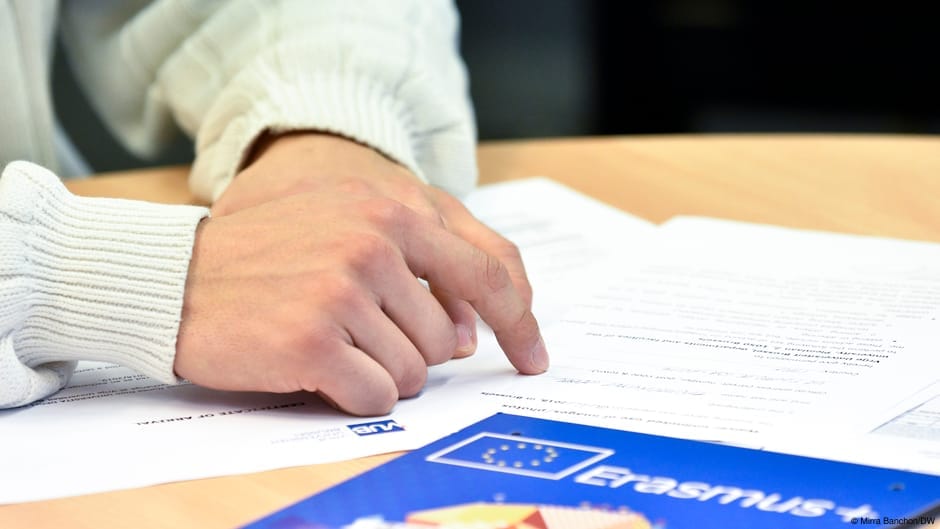
The European Union has excluded organizations based in Russia and individuals residing there from participation in Erasmus+, extending the economic and institutional separation between Russia and Europe into education, research and workforce development.
Under the Erasmus+ programme guide covering the period through the end of 2027, Russia-based organizations and residents of the country cannot participate “in any capacity” in “any activities” conducted under the programme. The European Commission presented the guide on Thursday, November 19.
The restriction is based on residence and institutional location rather than nationality alone. People living in Russia are also no longer eligible for scholarships for Erasmus Mundus Joint Master programmes at European universities, regardless of their citizenship.
The document does not specify whether the restrictions apply to scholarships and projects whose funding was approved before the new rules were introduced. That uncertainty could affect students, researchers and institutions already planning multiyear academic work, while raising questions about the treatment of existing financial commitments.
Human-capital channels narrow further
For senior economic decision-makers, the measure is significant less for its immediate effect on aggregate output than for its cumulative impact on human capital and institutional connectivity. International education programmes help transfer expertise, build professional networks and support cooperation among universities, researchers and employers. Closing those channels can produce consequences that emerge gradually through weaker knowledge exchange, reduced labour mobility and fewer opportunities for collaborative research.
Erasmus has operated for more than 30 years. Between 2014 and 2021, approximately 13,200 students and researchers from Russia participated in the programme. Their exclusion from future activities removes a route through which Russian residents gained access to European academic institutions and through which European universities maintained links with Russian students and scholars.
Russia-based organizations and residents cannot participate “in any capacity” in “any activities” under Erasmus+ through the end of 2027.
The policy may further redirect internationally mobile students and researchers toward universities outside the EU. Over time, such a shift could alter the geography of education exports, research partnerships and skilled migration. European institutions may lose access to part of the applicant pool based in Russia, while alternative academic destinations could benefit from additional tuition demand and talent.
For Russia, the longer-term economic cost could come through reduced exposure to European teaching, research standards and professional networks. The restrictions may also reinforce constraints on the circulation of specialized knowledge at a time when technological capability and workforce quality are increasingly central to productivity growth.
EU policy moves from institutions to individuals
The new guidance builds on measures adopted after Russia’s full-scale invasion of Ukraine in 2022. Following the invasion, the Council of the EU prohibited financial and other support for Russian state organizations under programmes financed from the EU budget.
The latest rules have a broader practical reach because they also cover individuals residing in Russia and organizations based there. The Erasmus Mundus scholarship restriction applies irrespective of citizenship, making geographic residence the decisive criterion. This signals a shift from restrictions focused on state-linked entities toward a wider separation of Russia-based participants from EU-funded academic mobility.
That distinction matters for policy analysis. Measures aimed at public institutions primarily constrain official cooperation and government-linked financing. Residence-based exclusions also affect private individuals, independent academics and potentially non-state organizations, widening the range of human-capital flows influenced by EU policy.
The lack of clarity concerning previously approved projects may create near-term administrative and financial uncertainty. Universities and programme administrators will need to determine whether existing commitments remain valid, while affected participants may face decisions about relocation, alternative funding or changes to planned study and research.
A larger programme with a narrower eastern reach
The restrictions come as the European Parliament backs a substantial expansion of Erasmus. On October 22, lawmakers supported increasing the programme’s budget to €47.4 billion for 2028-2034. The final amount must still be agreed with EU member states.
The juxtaposition is economically notable: the EU is preparing to invest more heavily in academic mobility while defining tighter geopolitical boundaries around access. Erasmus is therefore evolving not only as an education programme but also as an instrument aligned with broader European external policy.
For businesses and governments, the long-term effects will depend on whether the academic divide persists beyond 2027 and whether alternative channels of educational and scientific cooperation remain available. A prolonged exclusion would likely deepen the fragmentation of European and Russian research networks, with implications for talent pipelines, innovation partnerships and the future distribution of skilled workers.
The immediate scale is limited compared with trade, energy or financial sanctions. Yet education restrictions operate over a longer horizon. By influencing where people study, which professional networks they join and where they later work, the policy could shape economic relationships well after the current Erasmus+ programming period ends.



