Drone Strikes Put Russian Oil Infrastructure and Supply Networks at Risk
Reported fires near oil facilities in Rostov and Tatarstan highlight mounting operational risks for Russia’s energy infrastructure.
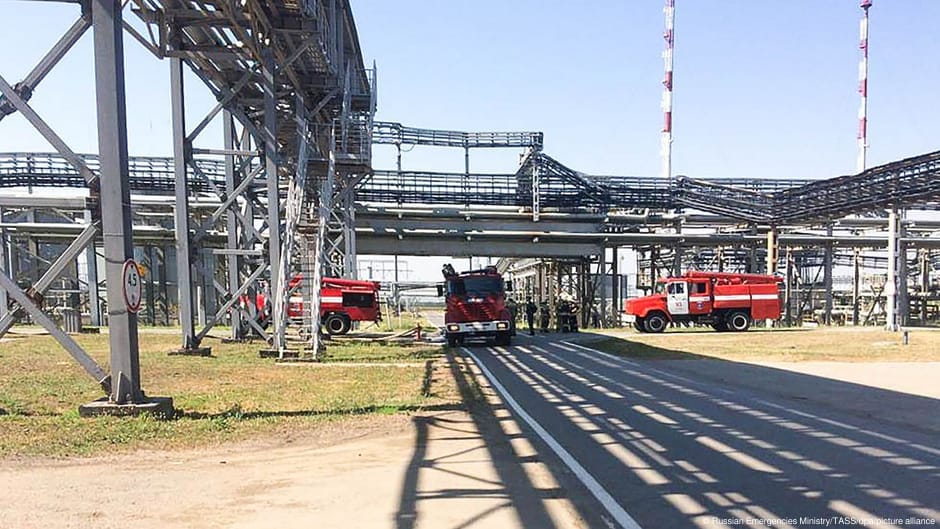
A major fire broke out near oil-related facilities in Novoshakhtinsk, in Russia’s Rostov region, after Ukrainian drones targeted the area for several hours overnight into Monday, November 23, according to an open-source intelligence analysis by the Russian outlet Astra. A separate, still unconfirmed report indicated that an oil pumping station in Tatarstan may also have been struck.
The incidents add to evidence that oil processing, storage and transportation assets remain exposed to repeated drone attacks far from the immediate front line. For economic policymakers and energy-market participants, the principal issue is not a single facility’s loss of output, which has not been established, but the cumulative effect of recurring disruptions on logistics, maintenance costs, insurance and the resilience of Russia’s petroleum supply chain.
Astra said it analyzed videos recorded by residents of Novoshakhtinsk and located the fire in the vicinity of the Novoshakhtinsk Petroleum Products Plant and TATA-GAZ, a company involved in fuel trading, storage and logistics. The refinery is connected to the Sukhodolnaya-Rodionovskaya oil pipeline.
Repeated attacks raise the cost of energy resilience
No figures for damage, casualties or interrupted production were provided in the source material. The absence of verified operational data limits any immediate assessment of the incident’s effect on refinery throughput or regional fuel availability. Nevertheless, attacks around interconnected refining, storage and pipeline assets can create consequences beyond the point of impact, particularly when operators must suspend activity for inspections or redirect supplies through alternative routes.
The economics of repeated infrastructure attacks are broader than repair bills. Operators may need to increase spending on air defenses, surveillance, redundant equipment and emergency response. More frequent shutdowns and inspections can lower effective capacity even when physical damage is contained. Over time, these costs can place pressure on margins, complicate investment planning and reduce the reliability of infrastructure that supports both domestic fuel distribution and export flows.
The macroeconomic risk lies in the accumulation of localized disruptions across an integrated oil network, rather than in any one reported strike.
The second reported incident concerns Tatarstan, a major center of Russia’s oil industry. Astra reported that a drone alert was declared in Almetyevsk at midnight on November 23. A local resident told the outlet of a “powerful impact” and several hits on “Druzhba.” Astra suggested that the account may have referred to the Kaleykino oil pumping station in the village of the same name.
Kaleykino is described as one of the nodes feeding crude into the Druzhba pipeline. At the time the original report was published, however, there was no confirmation that the station had been hit. Videos purportedly showing a fire at the facility were circulated by the Ukrainian monitoring channels Exilenova+ and Supernova+ on Telegram, but their location and contents were not independently confirmed in the source article.
Pipeline uncertainty carries regional implications
Druzhba is an important component of the wider oil transportation system, meaning that credible threats to its supporting infrastructure can attract attention beyond Russia. Even without evidence of a sustained interruption, uncertainty around pumping nodes may encourage refiners, traders and governments exposed to pipeline flows to reassess contingency plans, inventories and alternative supply arrangements.
The Kaleykino station has reportedly been targeted before. According to the source, the facility caught fire after a drone strike in February 2026 and was most recently targeted again overnight into November 19. The short interval between the November incidents underscores the operational challenge posed by repeated attacks on the same asset: repairs, inspections and security measures may have to be undertaken while the threat remains active.
For Russia, persistent pressure on oil infrastructure could force a policy trade-off between protecting energy assets and allocating defensive resources elsewhere. It may also accelerate efforts to disperse inventories, strengthen physical protection and establish redundant logistics. Such measures can improve resilience but require capital and may add friction to a sector already operating under geopolitical and trade constraints.
For the global economy, the immediate impact depends on whether attacks translate into measurable and prolonged reductions in processing or transportation. No such reduction was confirmed in the reports concerning Novoshakhtinsk or Kaleykino. The longer-term consequence is nevertheless significant: recurring attacks raise the probability of episodic supply disruptions and increase the risk premium surrounding Russian energy infrastructure.
Markets are likely to distinguish between dramatic images of fires and verified losses of capacity. Yet repeated incidents can still influence expectations, particularly when they affect facilities connected to larger pipeline networks. Senior decision-makers will therefore need to monitor not only confirmed physical damage but also shutdown duration, rerouting capacity, repair cycles and any resulting changes in Russian fuel exports or domestic distribution.



