Drone Strike on Major Russian Refinery Raises Fresh Fuel Supply Risks
The Kirishi facility processes about 7% of Russia’s crude, making repeated disruptions consequential for domestic fuel markets and logistics.
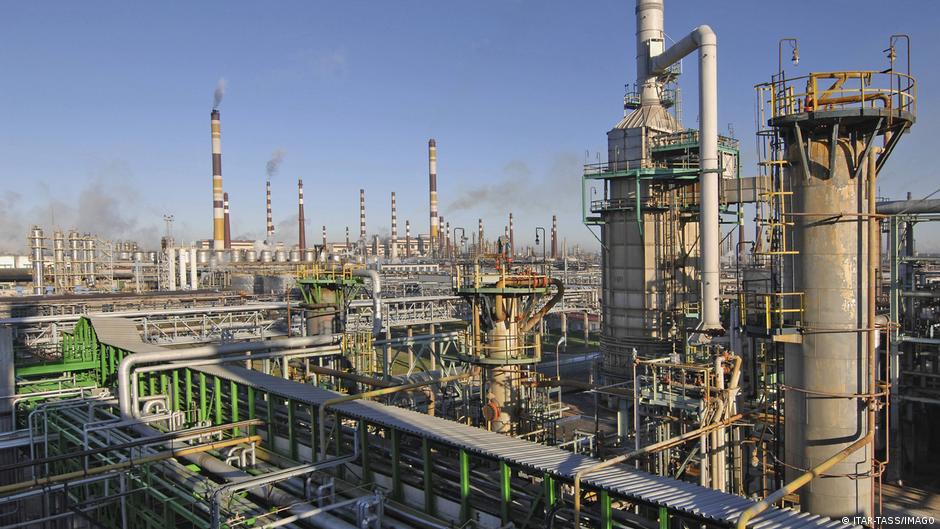
Ukrainian drones attacked the Kirishi oil refinery in Russia’s Leningrad region overnight on Monday, November 9, renewing concerns about the resilience of the country’s refining system and fuel supplies to its northwestern regions.
The Kirishi refinery, known as KINEF and owned by the Surgutneftegas group, accounts for approximately 7% of Russia’s total oil refining. Its scale makes any prolonged disruption economically significant, particularly when repeated attacks require repairs, constrain capacity or redirect fuel flows across Russia’s domestic market.
Astra and Ukrainian monitoring channels on Telegram reported the attack, citing eyewitnesses. Videos published on social media showed a fire on the refinery’s territory. Residents of Kirishi also reported air-defense activity and powerful explosions near the facility, while one apartment building was reportedly evacuated.
Leningrad region Governor Alexander Drozdenko confirmed that a drone had struck the industrial zone in Kirishi, although he did not identify the affected enterprise. He claimed that Russian air defenses had downed 113 drones over the region during the night.
There was a “drone strike in the industrial zone of the city of Kirishi,” Drozdenko said, without naming the facility.
Ukraine had not officially commented on the reported strike. The Kirishi refinery is located about 100 kilometers southeast of St. Petersburg.
A strategically important refining hub
KINEF is one of Russia’s largest refineries and plays a central role in supplying fuel to the country’s northwest. Among its customers is St. Petersburg’s Pulkovo Airport, which receives aviation kerosene from the plant. That role means an operational interruption could affect more than aggregate refining statistics: it could also increase pressure on regional inventories, transport infrastructure and alternative suppliers.
The refinery has a design capacity of between 20 million and 21 million tonnes of crude oil annually. In recent years, it processed about 18 million tonnes per year, equivalent to roughly 7% of total Russian refining volumes. A sustained outage at a facility of that size could force other plants to raise output, require longer-distance shipments of refined products or increase reliance on stored fuel.
The macroeconomic impact will depend on the extent of the damage and the duration of any shutdown. No verified assessment of operational losses from the latest attack was immediately available. Even so, the incident adds to an existing pattern of infrastructure risk across Russia’s downstream oil sector.
The Kirishi refinery has been targeted repeatedly by Ukrainian drones in recent years. Following a strike in late August 2026, the plant completely halted crude processing after two primary refining units were damaged. The recurrence of attacks suggests that repair costs and lost production may become persistent operating factors rather than isolated disruptions.
Broader implications for Russia’s energy economy
Refineries convert crude oil into fuels needed by households, industry, aviation and freight transport. Damage to refining capacity therefore creates a different economic pressure from disruptions to crude exports. Russia may continue producing oil while facing tighter domestic supplies of gasoline, diesel or aviation fuel in specific regions.
Repeated outages at large plants can also complicate government efforts to balance export revenue with domestic price stability. If available refined-product volumes decline, policymakers may face pressure to prioritize the internal market, adjust export policy or use inventories to limit price increases. Such measures can protect consumers in the short term but may reduce export earnings or transfer additional costs to producers.
The refinery’s location deep inside northwestern Russia also underscores the widening geographic exposure of energy assets. Greater spending on air defense, physical protection, redundancy and repairs may raise the long-term cost of maintaining refining operations. Those expenses could weigh on investment in modernization, particularly at facilities already navigating restrictions on access to capital, technology and equipment.
Surgutneftegas was placed under sanctions by the United States, the United Kingdom and the European Union in 2025, and KINEF was also named in sanctions documents. These restrictions form part of the economic backdrop to any repair program, potentially complicating procurement and financing even where replacement equipment is technically available.
For global markets, the immediate effect will depend on whether the latest incident reduces production and for how long. A short interruption may be absorbed through inventories and redistribution. A prolonged shutdown, especially alongside disruptions at other refineries, could tighten Russian refined-product availability, alter export flows and affect regional fuel markets beyond Russia.
The latest strike therefore highlights a structural risk for the Russian economy: a concentrated refining system can deliver scale and efficiency in normal conditions, but the loss of a single major facility can create disproportionate logistical and policy consequences. With KINEF responsible for about one-fourteenth of national refining, its operational status will remain an important indicator for fuel security in northwestern Russia and for the durability of the country’s broader energy infrastructure.



