Drone Alert at UK Air Base Highlights Rising Security Costs for Europe
The incident at RAF Lakenheath underscores how geopolitical tensions are reshaping military infrastructure, investment and risk planning.
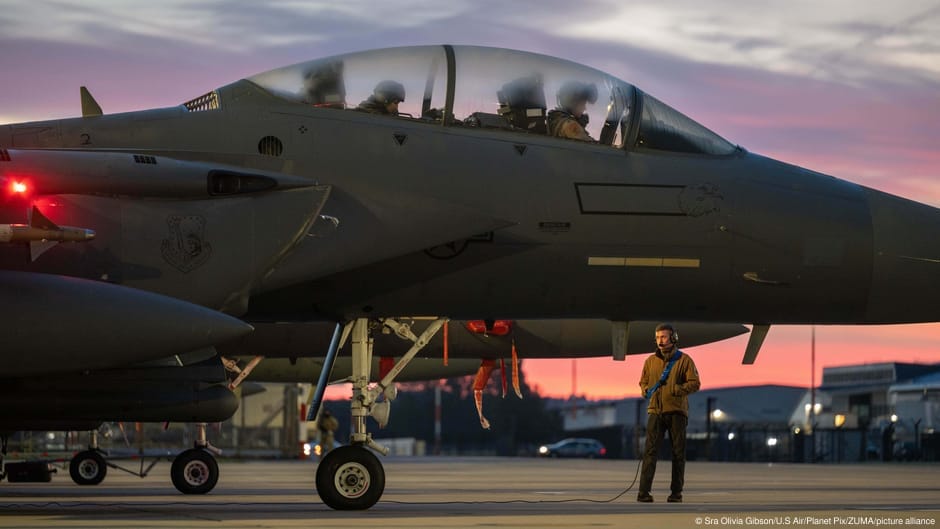
The US Air Force reported suspected unauthorized drone activity on Friday evening, November 13, over RAF Lakenheath, a British Royal Air Force base that also hosts American military personnel. The incident caused no injuries or damage, but it adds to evidence that European defense installations are operating in an increasingly complex and costly security environment.
“Neither personnel, aircraft nor infrastructure were harmed,” the US Air Force said. American military representatives added that they were continuing to work closely with British partners to protect service members and nearby communities.
Personnel were instructed to shelter in place when the drones appeared, according to a copy of a military alert distributed at the base and reviewed by Sky News. Residents of a neighboring village reported sounds resembling a siren, the BBC said.
An alarm was also reported on the evening of November 13 by residents near RAF Feltwell, another base located approximately 11 kilometers from Lakenheath, according to the Daily Mail. The available reports did not establish whether the alerts at the two facilities were connected.
Infrastructure security becomes an economic variable
Although the episode caused no physical damage, unauthorized drone activity around strategically important facilities can impose broader economic costs. Governments and military operators may face sustained spending on detection systems, electronic countermeasures, perimeter protection, personnel training and coordination with civilian authorities.
For senior decision-makers, the significance lies less in a single disruption than in the cumulative burden created when relatively inexpensive technologies can trigger protective measures around high-value assets. Repeated incidents can increase operating costs, complicate aviation schedules and require additional investment across military and dual-use infrastructure.
“Neither personnel, aircraft nor infrastructure were harmed.”
The alert also comes amid recent changes in the US military posture in Britain. On November 9, the United States withdrew its military tanker aircraft from RAF Mildenhall in eastern England. The following day, a senior American military officer was detained in Britain on suspicion of spying for Russia. Local police said, however, that the detention was not connected to other counterterrorism investigations.
The Wall Street Journal reported that the United States relocated the aircraft because of a threat from Iran. One indirect indication cited in connection with that assessment was the US Air Force’s withdrawal of B-1 bombers from RAF Fairford, another English air base, in early October. Those aircraft had been used in strikes against Iran.
Geopolitical risk reaches European investment planning
The sequence of alerts, aircraft movements and security investigations illustrates how geopolitical competition can affect economic planning far from an active battlefield. Britain’s role as a host for US forces makes its bases important nodes in transatlantic defense, but it also means that changes in threats involving Iran, Russia or other actors can generate local security requirements and national budget pressures.
For the United Kingdom and its European partners, the long-term policy challenge is to protect military mobility without creating excessive friction for surrounding communities or civilian transport networks. Investment may increasingly have to cover not only conventional defense capabilities but also resilience against drones, surveillance and other comparatively low-cost methods of disruption.
The consequences extend to procurement and fiscal policy. If drone alerts become more frequent, governments could face pressure to accelerate purchases of counter-drone equipment and integrate military surveillance with police and civilian aviation systems. Such programs may support parts of the defense-technology sector, while also competing with other public spending priorities at a time when European governments are balancing security commitments against constrained budgets.
The Lakenheath incident follows another security episode at RAF Fairford. In late September, three white vans were discovered on the base, after which police temporarily detained five suspects. British Prime Minister Andy Burnham said there were “strong indications” that Iran had played a role in those events. Tehran called the allegations unfounded.
No evidence cited in the reports established responsibility for the suspected drone activity at Lakenheath. That uncertainty is itself relevant to economic and policy calculations: authorities may need to invest in prevention and resilience before attribution is possible, while avoiding conclusions that could intensify diplomatic tensions without sufficient evidence.
For businesses and governments assessing European risk, the immediate event was contained. Its broader message is that military readiness, infrastructure protection and geopolitical exposure are becoming more closely linked. The resulting costs are likely to influence defense budgets, technology procurement and the long-term allocation of public capital across Europe.



