Deutsche Bahn Unit’s Russia Links Raise Sanctions and Trade Risks
Reported payments linked to Eurasian rail transit highlight the widening gap between formal sanctions compliance and economic disengagement.
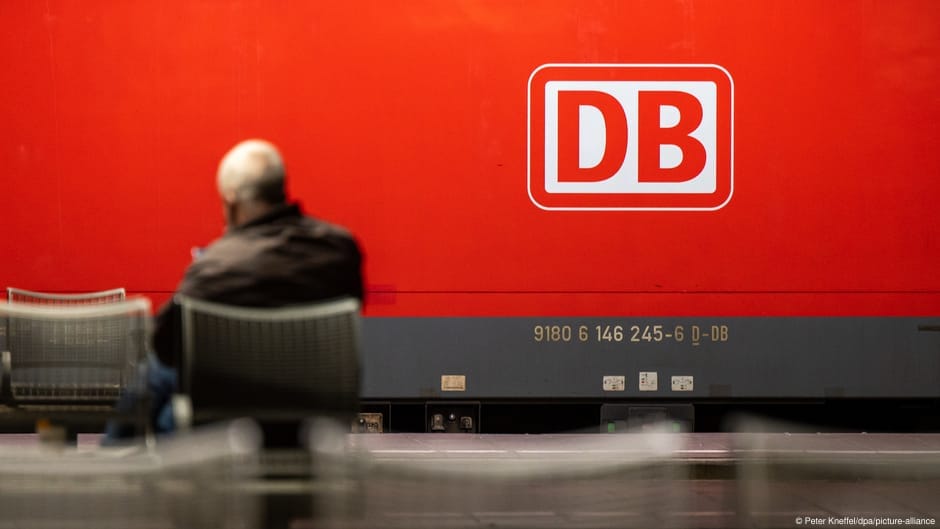
A Deutsche Bahn subsidiary has continued conducting business in Russia since Moscow launched its war against Ukraine, according to the German business newspaper Handelsblatt, raising fresh questions about sanctions enforcement, state-owned infrastructure revenues and the resilience of Eurasian trade corridors.
Nearly €400 million has passed through DB Cargo Russija, a Russian limited liability company owned by Deutsche Bahn subsidiary DB Cargo, since 2022, Handelsblatt reported on Monday, November 17, citing the company’s annual reports. Most of the money went to railway network operators and Russian counterparties, the newspaper said.
The scale of the reported flows underscores a broader policy challenge for European governments: sanctions can restrict specified goods, entities and financial activities without necessarily ending commercially significant transit operations. For senior decision-makers, the case illustrates how transport networks can continue generating revenue for Russian state-linked infrastructure even when a European company says its activities remain within the legal boundaries of the European Union’s sanctions regime.
Infrastructure payments and indirect exposure
DB Cargo Russija openly advertises its operations in Russia. Its publicly accessible website says the company has existed since 1999, lists a Moscow address and provides information about its employees. It describes its activities as Europe-China-Europe transit container transport and transport solutions for shipments across the Commonwealth of Independent States, the EU and Asia.
Russia’s Transport Ministry registered DB Cargo Russija in a newly established state register of freight forwarders in May, according to Handelsblatt. The newspaper said it was impossible to determine the precise amount transferred to Russian Railways, or RZD, for access to infrastructure. However, it estimated that several hundred million euros may have reached RZD directly or indirectly.
That uncertainty is economically significant. Complex contracting chains can make it difficult for regulators, investors and company boards to identify the ultimate beneficiaries of payments, particularly when a service provider purchases capacity rather than operating trains itself. Such structures can preserve important trade links while complicating the assessment of financial exposure to sanctioned or state-controlled counterparties.
DB Cargo told Handelsblatt that it fully complies with EU sanctions and does not send its own trains through Russia. The newspaper reported that DB Cargo Russija does not itself operate trains but organizes transport by purchasing capacity from a railway operator.
According to Handelsblatt, that capacity is most often obtained through UTLC, an intermediary jointly owned by the state railway groups Russian Railways, Belarusian Railway and Kazakhstan Temir Zholy. The arrangement connects European commercial activity to a regional logistics platform involving state-controlled operators across Russia, Belarus and Kazakhstan.
DB Cargo maintains that transit shipments are not covered by the EU embargo and comply with the applicable sanctions regime.
Corporate restructuring draws scrutiny
The issue had surfaced before. In September 2024, Der Spiegel reported, citing a German Transport Ministry document, that Deutsche Bahn was continuing to route tens of thousands of containers through Russia. At the time, DB Cargo said the transit shipments did not fall under the EU embargo and met sanctions requirements.
DB Cargo subsequently reorganized its internal structure, Handelsblatt reported. Orders for transport services from DB Cargo Russija are now placed by DB Cargo Transasia in Shanghai rather than by DB Cargo Eurasia GmbH in Berlin, according to the newspaper.
The shift has potentially important implications for corporate governance and sanctions policy. Moving the contracting relationship from a German entity to a Chinese-based unit may alter operational responsibility, but it does not automatically resolve questions about group-level control, economic benefit or regulatory intent. The case therefore tests whether sanctions oversight should focus narrowly on the legal entity executing a transaction or more broadly on the multinational group directing and benefiting from it.
Handelsblatt sought an assessment from German law professor Viktor Winkler, described as one of the country’s best-known experts on sanctions policy. Winkler said the approach taken by Deutsche Bahn could, from a legal perspective, be viewed as sanctions circumvention. He warned that DB Cargo could face “appalling sanctions risks” because of its activities in Russia.
DW has also contacted Deutsche Bahn for its own response regarding the company’s operations in Russia.
Long-term implications for European policy
The reported activity highlights the economic tension between Europe’s sanctions objectives and the continued demand for overland trade between Europe and China. Rail transit through Russia can remain commercially relevant even as geopolitical risk increases, creating incentives for logistics groups to preserve routes through subsidiaries, capacity-purchase agreements and third-country entities.
For policymakers, the central question is whether existing rules adequately address indirect infrastructure payments and corporate arrangements that may be legally distinct but economically integrated. Tighter restrictions could reduce revenue reaching Russian state-linked operators, but they could also redirect cargo to longer or more expensive routes and increase pressure on European supply chains.
For companies, the longer-term cost may extend beyond any formal penalty. Sanctions enforcement, reputational exposure and uncertainty over future policy can affect financing, insurance, procurement and strategic planning. The Deutsche Bahn case shows that technical compliance alone may not settle the wider economic and political debate over continued engagement with Russia.



