Democrats Secure Largest US House Majority Since 1992
Control of at least 258 House seats and 56 Senate seats gives Democrats broad scope to reshape US fiscal and economic policy.
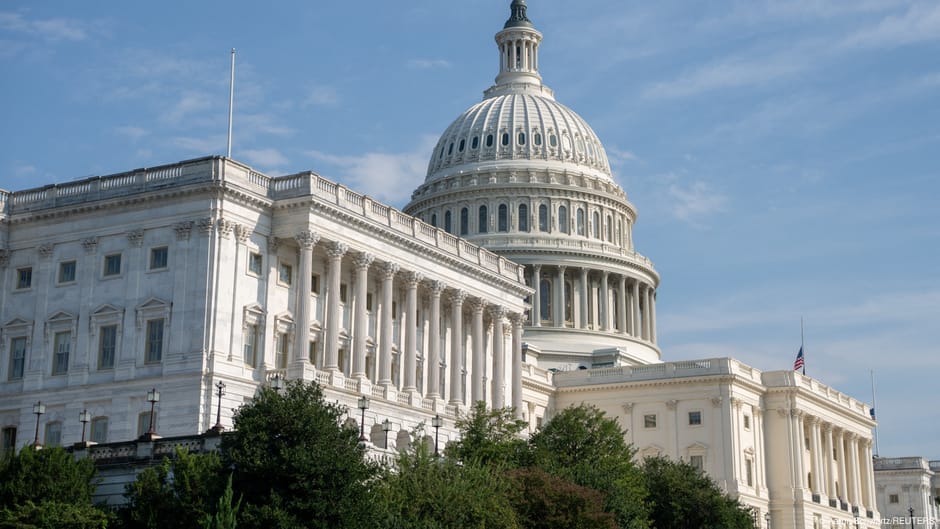
The US Democratic Party is set to hold at least 258 of the 435 seats in the House of Representatives, securing its largest presence in the chamber since 1992 and establishing a congressional majority with potentially far-reaching economic consequences.
The latest gain came in North Carolina, where the Associated Press projected a victory for Democrat Chuck Hubbard on Sunday evening, November 22, after 99% of votes had been counted. Hubbard had 48.7% of the vote and led Republican Virginia Foxx by just 300 votes. Winners have yet to be determined in four additional House races.
The result gives Democrats their strongest platform in decades for pursuing changes to taxation, public spending, regulation and industrial policy. The scale of the majority could also reduce the influence of individual lawmakers and narrow factions during negotiations, although the eventual policy direction will depend on the party’s internal priorities and its relationship with the executive branch.
“House Democrats have just secured the largest majority held by either party in Congress in this century,” House Democratic leader Hakeem Jeffries said.
A stronger mandate for economic policy
The last time Democrats won 258 House seats was in 1992. The party came close in 2008, when it secured 257 seats. Republicans, by comparison, held 247 seats in the lower chamber from 2015 to 2017, their largest recent House majority.
For senior decision-makers, the significance extends beyond the historical comparison. Large congressional majorities can alter expectations about the durability and speed of US policymaking. Investors and multinational companies will be watching whether Democrats use their advantage to advance changes affecting federal revenue, infrastructure, energy, healthcare, labor markets and trade-sensitive industries.
The composition of Congress matters globally because US fiscal decisions influence demand, government borrowing and capital flows across international markets. Any substantial shift in spending or taxation could affect expectations for growth, inflation and interest rates, with consequences for currencies, sovereign debt and corporate financing well beyond the United States.
The House result is reinforced by Democratic gains in the Senate. In the November 3, 2026 midterm elections, the party captured 56 of the chamber’s 100 seats. Its candidates recorded unexpected victories in traditionally Republican states, including Alaska, Texas, Kansas, Iowa, Ohio, South Carolina and Mississippi.
Holding 56 Senate seats should give the party greater room to move legislation through Congress and to manage confirmation processes. However, it does not eliminate every procedural obstacle, and the breadth of the Democrats’ coalition may create its own constraints. Candidates elected from traditionally Republican states may face different political incentives from colleagues representing strongly Democratic constituencies, particularly on taxation, energy and the size of the federal government.
Regional shift broadens the economic coalition
The geographic reach of the Democratic gains is an important part of the result. Victories across states with distinct industrial, agricultural and energy interests could broaden the range of regional priorities represented within the party. That may shape negotiations over federal investment, sector-specific support and policies affecting resource-producing states.
Alaska delivered another notable change, electing a Democratic governor for the first time since 1998. Jonathan Kreiss-Tomkins won 51% of the vote, comfortably finishing ahead of several Republican rivals. The result adds a state-level dimension to the broader political realignment and could influence debates involving public investment and Alaska’s resource-dependent economy.
For global businesses, the central question is whether the election produces a sustained policy shift or a period of negotiation within an enlarged Democratic coalition. The party’s congressional strength creates the capacity for significant action, but the diversity of its new electoral map could temper the pace or scope of change.
The unresolved outcomes in four House contests may increase the final Democratic total, but they will not change the fundamental balance of power. With at least 258 House seats and 56 Senate seats, Democrats enter the next congressional term with a level of legislative authority unmatched by either party in the chamber this century. Markets will now turn from electoral arithmetic to the policy agenda that this mandate enables.



