Canada Bars Russian Players From 2027 World Juniors Despite Valid Visas
Ottawa’s intervention highlights how sanctions policy and geopolitical risk can override sports arbitration and reshape major events.
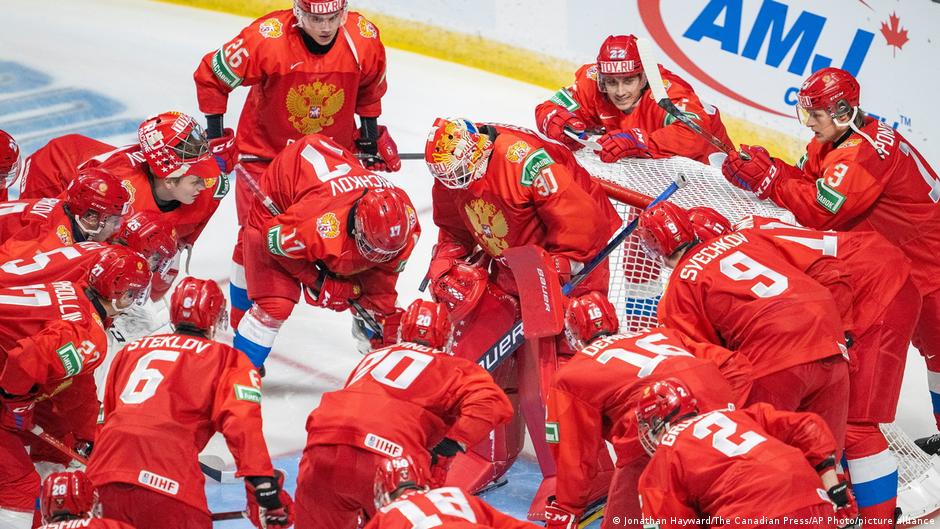
Canada will prevent Russian hockey players from entering the country for the 2027 IIHF World Junior Championship, including athletes who already hold valid visas, Sports Minister Adam van Koeverden said on Wednesday, November 11. The decision turns a dispute over participation in an international tournament into a broader test of how national policy can constrain the practical effect of sports arbitration.
The Canadian government has formally informed the International Ice Hockey Federation, or IIHF, and Hockey Canada that it will not issue visas to Russian participants, according to the announcement. Van Koeverden said the immigration, refugees and citizenship minister would also assess cases individually and take steps to deny entry to Russian and Belarusian athletes and officials seeking to attend the competition, regardless of whether they possess valid visas.
“The minister will take measures to conduct an individual assessment and prevent Russian and Belarusian athletes and officials from entering Canadian territory to participate in competitions, regardless of whether they hold valid visas,” van Koeverden said.
The minister said the measures were not directed against Russian or Belarusian people. He described them as safeguards intended to prevent the governments of Russia and Belarus from using international sporting events in Canada as platforms for state representation, political legitimisation and propaganda.
Canada’s consistent policy, he added, allows only individual athletes competing under neutral status to continue participating in international sports competitions hosted in the country. Van Koeverden said Ottawa’s position remained unchanged while Russia continued its war against Ukraine, adding that there could be no return to business as usual and that Canada would continue supporting Ukraine.
National Policy Collides With Sports Arbitration
The intervention follows an October 30 ruling by the Court of Arbitration for Sport, or CAS, requiring the IIHF to admit Russian national teams to international tournaments beginning in 2027, despite the continuing full-scale war against Ukraine. The first competition expected to be covered by that decision is the World Junior Championship in Canada.
The tournament is scheduled to run from December 26 to January 5 in Edmonton and Red Deer. Under a draft championship schedule circulated by the IIHF, Russia was due to compete in Group B against Canada, the Czech Republic, Switzerland and Latvia.
The Canadian decision illustrates the limits of a sporting tribunal’s authority when its rulings intersect with sovereign control over borders. CAS can determine eligibility within the framework of international sport, but it cannot compel a host country to issue visas or admit foreign nationals. For senior decision-makers, the dispute is a reminder that legal permission to participate in a cross-border activity does not eliminate policy, security or operational barriers imposed by national governments.
The IIHF expressed disagreement with the CAS ruling and cited difficulties involving visas, security, logistics and last-minute changes to the competition format. Those concerns point to wider economic consequences for event organisers and host institutions. Uncertainty over participating teams can affect scheduling, venue planning, security arrangements and other commitments that depend on a stable tournament structure.
Prime Minister Mark Carney had already said on November 4 that Russian hockey players would not receive visas to participate in the 2027 championship. Van Koeverden’s subsequent statement goes further by making clear that valid visas would not necessarily secure admission and that Russian and Belarusian athletes and officials could face individual entry assessments.
Knock-On Effects Across the Tournament
The unresolved participation question has consequences beyond the Russian team. On November 8, the Norwegian Ice Hockey Federation, or NIHF, said Russia had been placed tenth under the championship’s new competition system following the CAS decision. That placement would relegate Norway, the lowest-ranked team, to Division 1A.
Canada’s refusal to admit Russian participants therefore creates a conflict between the roster implied by the arbitration ruling and the one that may be viable under Canadian immigration policy. Any resulting revision could affect national federations, athletes and organisers whose preparations depend on the final competition structure.
The episode also signals a longer-term policy shift in which governments increasingly treat access to major sporting events as part of their broader geopolitical toolkit. International federations may consequently need to account for host-country sanctions, entry rules and diplomatic positions much earlier when allocating tournaments and designing qualification systems.
For organisations involved in international events, the central economic lesson is that geopolitical exposure now extends well beyond formal sanctions. Immigration discretion, security policy and reputational considerations can alter participation even after a binding sports judgment. That raises the value of contingency planning and may influence future choices over host locations, contractual protections and tournament formats.



